

A decade ago, the standard advice for dull or congested skin was to scrub harder. Today the shelf looks different. Glycolic, lactic, salicylic, and mandelic acids now sit in the routines of people who would never have described themselves as peel users. That shift happened for good reasons, and it created a new set of problems. Acids work by loosening the bonds that hold dead skin cells together, which means frequency, concentration, and pairing matter far more than most labels admit. If you want the background on how a single acid toner became a fixture in cities like New York, check this guide. What follows is the practical version: what each acid actually does, who it suits, and how to use it without wrecking your skin barrier.
Quick Answer
Exfoliating acids became mainstream because they deliver more consistent results than physical scrubs with less mechanical abrasion. AHAs (glycolic, lactic, mandelic) dissolve dead cells on the skin’s surface and suit dullness, texture, and uneven tone. BHAs (salicylic acid) are oil-soluble and work inside pores, making them the better fit for blackheads and acne-prone skin. PHAs are larger molecules that exfoliate gently and hydrate, which is why they are usually the safest starting point for sensitive or reactive skin. The catch is that all of them thin the outer layer temporarily, so overuse causes irritation, and AHAs increase sun sensitivity.
Key Takeaways
- Acids are not interchangeable. Salicylic acid targets pores; glycolic acid targets surface texture and tone. Choosing the wrong one wastes money and can aggravate the problem.
- Start with one acid, once or twice a week, at the lowest concentration available, and increase only if your skin stays calm for two to three weeks.
- Daily SPF is non-negotiable when using AHAs, because they make skin more vulnerable to UV damage.
- Signs of over-exfoliation include stinging on contact, tightness, flaking, and new breakouts in areas that were previously clear.
- Acids are not the right answer for everyone. Active eczema, rosacea flares, open skin, and recent retinoid irritation all call for pausing them.
Why Chemical Exfoliants Replaced the Scrub
Physical exfoliants — sugar scrubs, walnut-shell cleansers, brushes — remove dead cells by friction. The problem is that friction is indiscriminate. It removes dead cells and healthy ones together, and the pressure is rarely even across the face. Over time, that approach tends to leave skin red and reactive rather than smooth.
Acids take a different route. They weaken the bonds between dead cells so those cells shed on their own, which produces a more even result with less trauma to the skin underneath. Dermatologists have used acid peels in clinical settings for decades; what changed in the mid-2010s was availability. Budget-focused brands started selling single-ingredient acid toners at concentrations consumers could use at home, and the category exploded from there.
The trade-off is that a product which is forgiving in a clinic, applied by someone who can see your skin, is much less forgiving in a bathroom when you are guessing. That is the main reason acid routines go wrong.
What Each Acid Actually Does
Most exfoliating acids fall into three families, and the family matters more than the brand.
| Family | Common examples | Best suited to | Main trade-off |
|---|---|---|---|
| AHA | Glycolic, lactic, mandelic, tartaric | Dullness, rough texture, uneven tone, surface dryness | Increases sun sensitivity; glycolic is the smallest molecule and the most irritating |
| BHA | Salicylic acid, betaine salicylate | Clogged pores, blackheads, oily and acne-prone skin | Can be drying; a poor fit for very dry or dehydrated skin |
| PHA | Gluconolactone, lactobionic acid | Sensitive, reactive, or barrier-compromised skin | Gentler results, so visible change takes longer |
Within the AHA group, molecule size is the practical difference. Glycolic acid has the smallest molecule and penetrates fastest, which is why it produces the most dramatic results and the most stinging. Lactic acid is larger and slightly more hydrating. Mandelic acid is larger still and is often the better entry point for people with deeper skin tones, because a slower, more even exfoliation carries less risk of post-inflammatory hyperpigmentation.
How to Choose an Acid for Your Skin
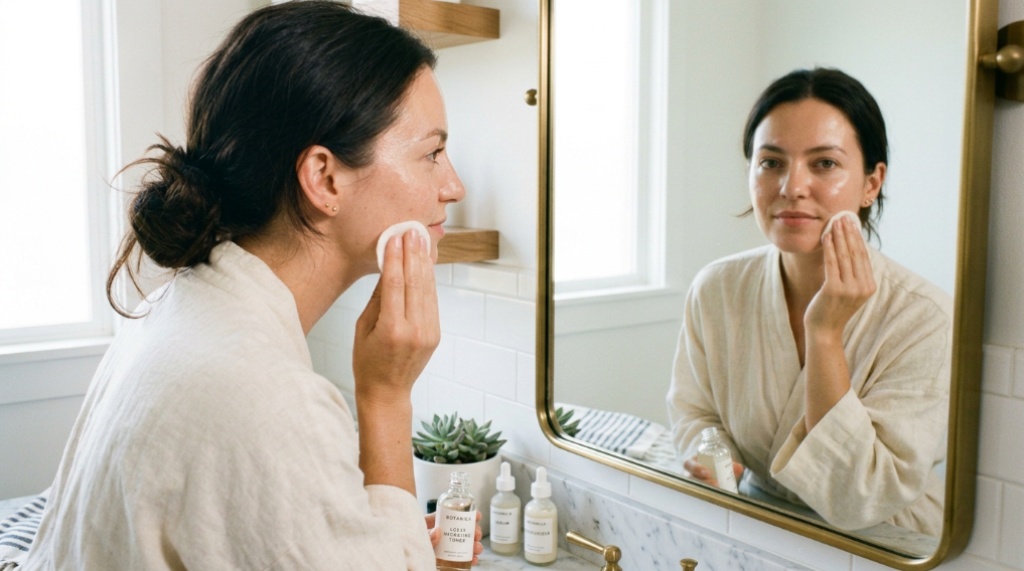
Match the acid to your primary complaint rather than to whatever is trending.
- Congested pores and recurring blackheads: salicylic acid, typically in a toner or a leave-on treatment.
- Dull, rough, or sun-damaged surface texture: glycolic or lactic acid.
- Uneven tone or post-acne marks: lactic or mandelic acid, paired with daily sunscreen.
- Sensitivity, redness, or a recently damaged barrier: a PHA, or nothing at all until the barrier recovers.
- Combination skin with different concerns on different zones: treat the T-zone with a BHA and leave the cheeks alone, rather than applying one product everywhere.
Concentration is the second decision. Lower percentages used consistently usually outperform high percentages used sporadically, because the damage from a strong acid shows up days later, when you have already forgotten what caused it, for more insights on home improvements, check out our guide on how quality siding transforms home protection and curb appeal.
Building a Routine That Does Not Backfire
This sequence works for most people starting out.
- Weeks 1–2: apply the acid once a week, at night, on clean dry skin. Wait a minute before the next step.
- Weeks 3–4: if there is no stinging, redness, or flaking, move to twice a week.
- Beyond week 4: add a third night only if your skin is genuinely comfortable. Many people never need more than two or three nights a week.
- Every morning after: apply sunscreen. This is not optional with AHAs.
- On off nights: use a plain moisturiser and, if you use one, a retinoid. Do not stack a retinoid and a strong acid on the same night when you are starting out.
One more pairing rule worth knowing: vitamin C and strong acids both need a low pH to work well, so applying them back to back can reduce the effectiveness of both and increase irritation. Splitting them — vitamin C in the morning, acid at night — avoids the conflict entirely.
Common Mistakes That Cause Irritation
Most acid-related skin damage comes from a handful of predictable errors.
- Using several acid products at once. An acid toner, an acid serum, and an acid cleanser on the same night is one exfoliation, not three. Count the actives, not the bottles.
- Increasing frequency too quickly. Skin often looks fine for the first week and reacts in the second. Give each change two to three weeks before judging it.
- Ignoring the cleanser. Many foaming cleansers already contain salicylic or glycolic acid, which quietly adds to your weekly total.
- Exfoliating irritated skin to “clear it up.” Stinging, shiny tightness, and sudden breakouts are signals to stop, not to push through.
- Skipping sunscreen. Without it, the pigmentation you are trying to fade will keep returning.
When Acids Are the Wrong Choice
Exfoliating acids are effective, but they are not universally appropriate. Pause them during an active eczema flare, a rosacea flare, or any period when skin is cracked, peeling, or raw. Stop them after professional treatments such as chemical peels, microneedling, or laser, until your practitioner says otherwise. If you are using a prescription retinoid, introduce acids only after your skin has adjusted, and then at a lower frequency than you would otherwise.
Pregnancy is a separate conversation. Glycolic and lactic acid are generally considered acceptable in cosmetic concentrations, while high-dose salicylic acid peels are not. Ask a clinician rather than relying on a general article, including this one.
If your concern is persistent acne, texture that has not improved after a few months of consistent use, or pigmentation that keeps returning, an acid toner is unlikely to solve it alone. That is a point to see a dermatologist rather than add another product.
Frequently Asked Questions
How often should I use an exfoliating acid?
Once or twice a week is enough for most people, especially when starting. Some tolerate three or four nights a week after months of gradual adjustment, but more frequent use does not produce proportionally better results and raises the risk of barrier damage.
Can I use glycolic acid and salicylic acid together?
You can, but not at the same time when you are new to acids. Alternate them on different nights, or use a formula that already combines them at a tested ratio. Layering two separate strong acids on the same evening is a common cause of irritation.
Do exfoliating acids make skin thinner over time?
Not in the way people often assume. Regular use can thicken the deeper dermal layer while thinning the dead surface layer, which is generally beneficial. The damage comes from overuse, which disrupts the barrier rather than from the acid itself.
Why did my skin get worse after I started using an acid?
Two possibilities. Purging — a temporary increase in breakouts in areas you normally break out — can occur with BHAs and usually settles within a few weeks. Irritation looks different: redness, stinging, and breakouts in new areas. If it is irritation, reduce frequency or stop.
Is a PHA strong enough to do anything?
Yes, just more slowly. PHAs exfoliate the surface and also attract water, so they suit sensitive skin that cannot tolerate AHAs. Expect gradual improvement in texture rather than a rapid resurfacing effect.
Can I use an acid toner in the morning?
You can, but evening is usually the better choice. AHAs increase photosensitivity, and applying them at night gives skin time to recover before UV exposure. Whatever time you choose, sunscreen in the morning is essential.
Conclusion
Exfoliating acids earned their place in modern routines because they solve real problems — texture, clogged pores, uneven tone — more reliably than scrubs ever did. They also demand more attention than most skincare products. Pick one acid that matches your main concern, start at the lowest concentration once a week, and let your skin’s reaction, not the label, decide whether you increase. If irritation appears, back off rather than push through. Used that way, an acid becomes a genuinely useful tool; used carelessly, it becomes the reason your skin never quite settles.