
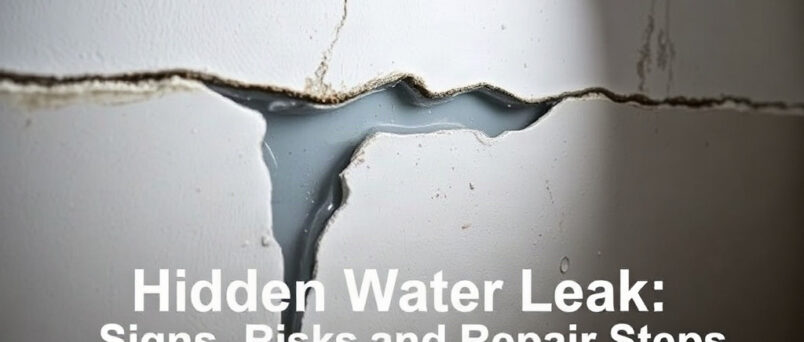
A slow leak behind wall often announces itself with a faint musty smell or a stain that keeps returning no matter how many times you paint over it. You hear nothing, see no burst pipe, and yet something is quietly damaging your home. This guide explains how to spot such a leak early, what it can cost if ignored, and which practical steps limit the damage. It also covers where a slow leak behind wall reference like //blogbbw.net/ fits into broader home maintenance reading.
Quick answer: A slow leak behind a wall is a small, steady water escape from a supply pipe, drain fitting, or seal hidden inside a wall cavity. Shut off the water supply first, then call a plumber to locate and repair it. Early detection keeps repair costs low and prevents mold and structural damage.
What is slow leak behind wall?
A slow leak is water escaping in small amounts over a long period. Unlike a burst pipe, it produces no dramatic flood. The water may travel along studs and drywall before showing anywhere visible, so the damage spreads outward from the source.
Common causes include a pinhole in a copper pipe, a worn washer inside a concealed valve, a cracked fitting behind a shower or toilet, and failed caulk or grout that lets moisture wick into the wall cavity. Condensation on cold pipes can also mimic a leak.
Signs a wall is hiding a leak
Watch for these clues:
- A musty, damp smell that does not clear with ventilation
- Paint that bubbles, flakes, or stains in patches
- A patch of drywall that feels soft or spongy
- Peeling wallpaper or a baseboard that swells
- Rising water bills without a change in habits
- A faint sound of running water when fixtures are off
How leaks stay hidden
Water follows the path of least resistance. It can drip down a stud, soak insulation, and pool on a sill or joist far from the pipe. That delay is why leaks are often discovered weeks or months after they begin.
A slow leak can dry out between drips, so the surface looks fine while the interior stays damp. The wall cavity holds moisture long after the visible stain fades, and that trapped dampness is what feeds mold and rot.
Takeaway: Identifying the source early depends on recognizing indirect clues, not just visible water. A musty smell and a climbing water bill often surface before any stain.
Why slow leak behind wall matters

The damage from a slow leak accumulates. Wood framing softens, drywall crumbles, and insulation loses its ability to hold warm air. In as little as a season, a leaking fitting can turn a small repair into a partial wall reconstruction.
Mold is the bigger concern for many homeowners. Damp drywall and insulation create ideal conditions for mold growth, which can affect indoor air quality and require professional removal. Removing mold costs more than fixing the pipe that caused it.
Water bills add up quietly. A steady drip can waste many gallons a day, and because the leak is hidden, the increase can go unnoticed for months. Insurance adds another layer: many policies cover sudden bursts but limit or exclude long-term seepage, so a leak left for months may not be covered at all.
Structural risk grows too. A leak near a floor joist or header can weaken load-bearing timber. That converts a plumbing job into a carpentry job.
Insurers often distinguish sudden damage from ongoing seepage. A leak documented only after months of slow dripping can fall outside standard coverage, so report suspected leaks early and keep records.
Takeaway: Acting quickly protects both the home and your wallet, since mold removal and structural repairs cost far more than an early plumbing fix.
Best practices
The right approach combines early detection, prompt repair, and sensible moisture control focused on prevention. These habits keep the problem small.
Investigate clues quickly
When you notice a musty smell or a stain, do not paint over it. Trace the likely source: check the rooms behind and above the affected wall, look at fixtures sharing that wall, and note whether the stain grows during fixture use. That timing tells a plumber where to look first.
Use moisture meters and shut-off valves
An inexpensive pin-type moisture meter helps confirm that a wall is damp even when it looks dry. Installing a whole-house shut-off valve, manual or automatic, gives you one lever to stop supply if a leak is suspected. Automatic leak detectors can trigger shut-off when they sense moisture.
Repair the cause, not the symptom
Sealing a hairline crack or replacing caulk around tile is fine when seals are genuinely the cause. If a fitting or length of pipe is failing, patching drywall only hides the leak. A plumber can pressure-test the line and open the wall at a small, targeted spot. Discussing the issue with others through a maintenance community such as //report-e.com/ can help you weigh repair options and decide how much wall to open.
Comparison: symptom-only fix vs. source repair
| Approach | Short-term cost | Risk |
|---|---|---|
| Patch and repaint | Low | Leak continues, damage returns |
| Replace the faulty section | Higher | Resolved if the source is correctly identified |
The patch looks cheaper today. It costs more over time because the hidden damage keeps growing.
Document and follow up
Photograph the stain, note when it appeared, and keep the plumber’s findings. A written record supports insurance claims and guides any future repairs.
Takeaway: Good practice means finding the source, fixing the actual pipe or seal, and keeping evidence. Simple tools and a shut-off valve make all of this faster.
Common mistakes to avoid
Most expensive leak stories trace back to a few predictable missteps.
Painting over stains. A fresh coat hides the clue without fixing the leak. The stain returns within weeks, and the moisture keeps working behind the new paint.
Assuming a small leak is harmless. A drip that produces no puddle still wets framing and insulation every day. Size of the puddle is not a measure of the risk.
Tearing open the whole wall at random. Cutting wherever the stain appears can miss the true source by several feet. Water travels along framing, so pinpointing with a moisture meter or a plumber’s inspection saves needless damage.
Ignoring the water bill. A steady bill rise over two or three cycles is a strong signal. Many people blame seasonal use or a rate change and delay investigating for months.
Skipping professional locating. Some leaks are hidden enough that guessing wastes time and drywall. A plumber can use moisture readings and targeted access to find the source with one small opening.
If water is pooling near electrical outlets, a ceiling sags, or mold covers an area larger than a dinner plate, stop and call a professional. Those signs point to hazards beyond a simple pipe fix.
Takeaway: Avoiding repeated mistakes requires resisting the urge to cover up the problem and acting on the first real clue.
FAQ
How much does it cost to fix a slow leak behind a wall?
Costs vary by location and access difficulty. A simple fitting repair may cost a modest amount, while a leak that requires opening and restoring drywall adds labor and materials. Get a written quote before work begins so you can compare options.
Can I ignore a slow leak if the stain is small?
No. A small stain marks water that has already traveled through the wall. The leak will keep damaging framing and insulation until the source is fixed, and the visible area often grows over time.
How do I find a leak without tearing out the wall?
Start with a moisture meter and a careful look at adjacent fixtures. A plumber can pinpoint the source using targeted readings and small access openings, which limits how much drywall you need to replace.
How long can a slow leak go undetected?
It can stay hidden for months, because water travels along studs before showing on the surface. Rising water bills and a musty smell are often the first signs.
Does homeowners insurance cover this kind of leak?
Coverage depends on the policy and the cause. Many policies cover sudden damage but limit ongoing seepage, so report a suspected leak promptly and keep documentation.
Conclusion
A hidden slow leak is easy to miss and costly to ignore. Early clues, like a musty smell, a rising water bill, or a stain that returns, matter more than a visible drip. Fix the source rather than the stain, and keep records for insurance. If you suspect a leak, turn off the water supply and arrange a professional inspection this week. That single call protects your walls, your air quality, and your budget far better than waiting for the damage to announce itself.