
You’ve got a modest-sized yard, a kitchen full of coffee grounds and vegetable scraps, and the nagging feeling that all that organic waste shouldn’t go to a landfill. But between Pennsylvania’s humid summers, freezing winters, and the occasional township noise or pest complaint, composting can feel like a project built for someone with more space. The reality is that many Pennsylvania homeowners compost successfully in backyards barely larger than a patio using a simple, adaptable setup like a Geobin backyard composter paired with a few climate-specific habits. The trick isn’t a bigger yard—it’s working with the state’s seasons instead of against them.
Quick Answer
To compost successfully in a small Pennsylvania backyard, use a compact, adjustable bin that fits a tight footprint, balance roughly two to three parts “browns” (dry leaves, cardboard, shredded paper) to one part “greens” (kitchen scraps, grass clippings), and account for the state’s cold winters by insulating the pile or accepting a slower, dormant phase from late fall through early spring. Turn regularly in summer, keep the pile as damp as a wrung-out sponge, and avoid meats, dairy, and pet waste to reduce odors and pests in close quarters.
Key Takeaways
- Pennsylvania’s four distinct seasons mean composting is a year-round effort, but the pile slows significantly or pauses during winter cold snaps.
- Small backyards benefit from vertical, adjustable bins rather than open piles, since they contain materials and take up less ground space.
- The browns-to-greens ratio matters more than any special equipment—too many wet kitchen scraps is the most common cause of smell, slime, and pests.
- Fall leaves are a free, abundant browns resource in Pennsylvania; stockpiling them in fall gives you carbon material through winter and spring.
- Local rules vary—some townships restrict bin placement near property lines, so confirm before you commit to a location.
Why Pennsylvania’s Climate Changes How You Compost
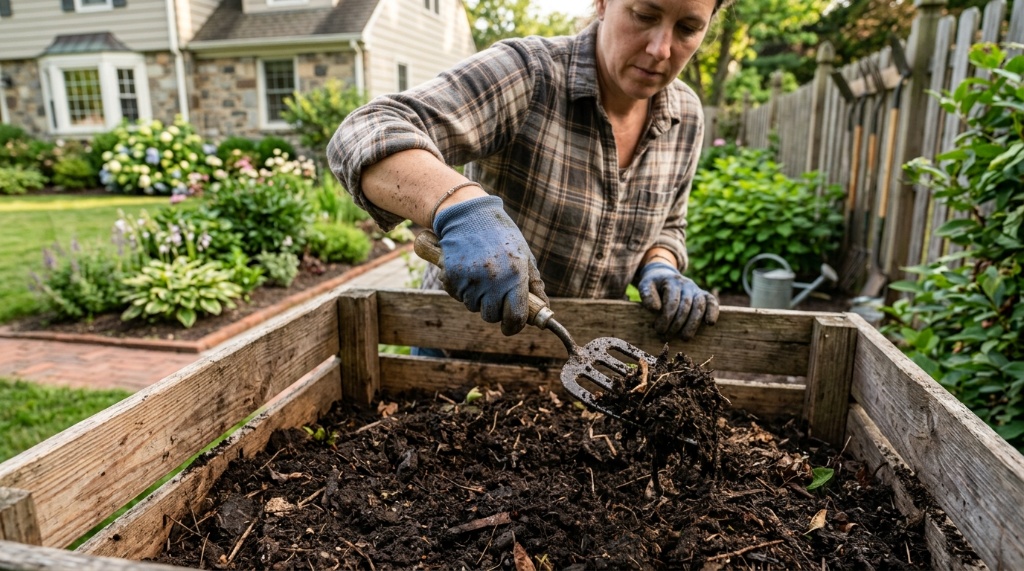
Most generic composting advice assumes a mild, stable climate. Pennsylvania doesn’t offer that. A backyard compost pile in Allentown, Erie, or Scranton might bake at 90°F in July and sit frozen solid for weeks in January. Composting microbes are most active between roughly 90°F and 140°F, so the biological engine driving decomposition essentially idles in winter and accelerates in summer.
That matters for your expectations. A pile that finishes in six to eight weeks starting in May might take four to six months if you start it in November. Cold-weather composting isn’t impossible—it’s just slower. Meanwhile, Pennsylvania’s humid summers help moisture retention but can make piles too wet if you don’t manage airflow, leading to anaerobic conditions and that unmistakable rotting smell.
The practical takeaway: plan around the seasons instead of expecting constant output. Build your biggest, most active pile in spring and early summer, then let volume shrink naturally through winter.
Choosing and Placing a Bin That Fits a Small Yard
In a compact yard, horizontal space is scarce, so a bin that expands as your pile grows—or collapses when it doesn’t—makes more sense than a fixed structure. Wire or perforated plastic hoop-style bins are popular for exactly this reason: they’re lightweight, ventilated, and easy to relocate. A square footage footprint of roughly three feet by three feet is often enough for a household producing typical kitchen and yard waste.
Placement is where small-yard composting gets tricky. You want:
- A level spot with partial sun, since full afternoon sun can dry the pile too fast in July
- Good drainage, so the base doesn’t stay soggy after heavy rain
- Convenient access from your kitchen door, because a pile you don’t want to walk to won’t get fed
- Distance from property lines and neighbor windows if your township has setback rules or you’re worried about odor complaints
Avoid placing a bin directly against a wooden fence or your house moisture held against wood or siding can cause rot over time, Before setting up your outdoor bins, ensure your foundation is stable by reading our comprehensive guide to effective site preparation in construction.
Getting the Browns-to-Greens Balance Right
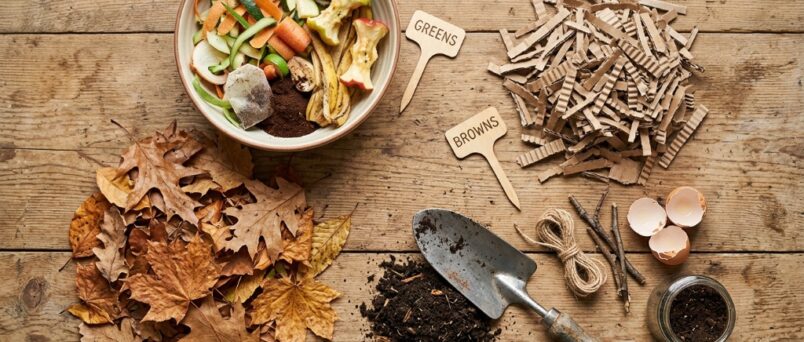
This is the single most important variable, and it’s also where most small-yard composters go wrong. Greens—kitchen scraps, grass clippings, coffee grounds—are nitrogen-rich and wet. Browns—dried leaves, shredded cardboard, straw, paper—are carbon-rich and dry. Aim for roughly two to three parts browns by volume to one part greens.
In practice, that means every time you dump a bucket of vegetable peels into the bin, you should add a similar or slightly larger handful of shredded leaves or torn cardboard and mix it in. Coffee grounds alone don’t require extra browns if you’re adding a small amount, but a whole bag from a coffee shop does.
Signs your ratio is off:
- Too wet, smells sour or like ammonia: add browns and turn the pile
- Too dry, nothing seems to be breaking down: add greens or a little water while turning
- Fruit flies or rodents: usually a sign of exposed food scraps—bury them deeper and add more browns on top
What to Compost (and What to Leave Out in a Small Yard)
Small-yard composting is less forgiving than a rural pile because problems are closer to your house and your neighbors. The general rule: compost plant-based kitchen scraps, yard trimmings, and uncoated paper, and skip anything that attracts pests or creates odor.
| Compost Freely | Compost With Caution | Avoid |
|---|---|---|
| Fruit and vegetable scraps | Grass clippings (thin layers only) | Meat, fish, bones |
| Coffee grounds and filters | Weeds with seeds | Dairy products |
| Dry leaves and straw | Cooked food with oil or sauce | Pet waste |
| Shredded plain cardboard | Diseased plant material | Grease, oils, fats |
| Eggshells | Citrus in large amounts | Charcoal ash, treated wood |
Grass clippings deserve special mention. They’re nitrogen-rich and compost quickly, but in a small bin a thick layer of clippings mats down and turns anaerobic fast. Spread them thin or mix them thoroughly with leaves.
Managing the Pile Through Every Season
Pennsylvania composting is really four different jobs across the year.
Spring
This is your build season. Turn the pile, add fresh greens from yard cleanup, and start actively managing moisture. Expect the fastest decomposition of the year.
Summer
Heat speeds decomposition but also dries the pile. Check moisture weekly—squeeze a handful; it should feel like a wrung-out sponge. Turn every one to two weeks to keep airflow and prevent overheating or matting.
Fall
Leaf season is a gift. Bag or bin extra dry leaves and store them as future browns. Mix fresh leaves into the pile and keep turning until temperatures drop. This is the last active stretch before winter dormancy.
Winter
Don’t expect much decomposition below freezing. Keep adding materials if you can—the pile will resume processing in spring—but consider insulating the bin with straw bales or a lid to retain some internal heat. Chop scraps smaller before adding; frozen chunks take longer to break down once things thaw.
Common Mistakes in Small-Yard Composting
- Adding scraps without browns: the fastest route to odor and flies
- Never turning the pile: slows decomposition and creates anaerobic pockets
- Overwatering or ignoring rain: piles can become waterlogged, especially in spring
- Putting the bin too close to the house: invites pests and moisture problems
- Expecting fast results in winter: microbial activity drops sharply in cold weather
- Ignoring township rules: some municipalities restrict compost bin placement or open piles
When Composting Doesn’t Work for Your Yard
Composting isn’t practical for everyone. If you rent, live in a tightly packed rowhouse with no yard access, or have a homeowner’s association that restricts outdoor bins, indoor vermicomposting (worm bins) or a municipal yard-waste drop-off may be better options. Similarly, if you generate very little organic waste, a small bokashi system or simply contributing to a community compost program can be more sensible than maintaining a bin you rarely feed.
Composting in a small Pennsylvania yard is entirely doable—it just requires working with the state’s climate and being a bit more deliberate about balance and placement than someone with acreage would need to be.
Frequently Asked Questions
Can I compost year-round in Pennsylvania?
Yes, but the pile will slow dramatically or pause when temperatures drop below freezing. You can keep adding materials through winter; most decomposition resumes in spring once the pile thaws.
How long does compost take in a small backyard bin?
In active spring and summer conditions, finished compost typically takes two to four months. Cooler weather and less turning extend that timeline considerably.
Do I need to turn my compost pile?
Turning isn’t strictly required, but it speeds decomposition significantly by adding oxygen and distributing moisture. Turning every two to four weeks is a reasonable middle ground for small bins.
Will composting attract rodents or raccoons?
It can if food scraps are exposed. Bury kitchen waste in the center of the pile, cover it with browns, and avoid adding meat, dairy, or greasy food, which are the biggest attractants.
What’s the easiest brown material to find in Pennsylvania?
Fallen leaves in autumn are the most abundant free brown material. Shredded plain cardboard and paper are reliable year-round backups.
Does compost smell bad if it’s done right?
Properly balanced compost has a mild, earthy smell. A sour, rotten, or ammonia-like odor almost always signals too many greens, too much moisture, or insufficient airflow.
Conclusion
Successful composting in a small Pennsylvania backyard comes down to picking a compact bin that fits your space, keeping the browns-to-greens ratio balanced, and adjusting your expectations with the seasons. Fall leaves are your best free resource, summer heat is your fastest decomposition window, and winter is a natural pause rather than a failure. Start with a manageable bin, feed it consistently, and let Pennsylvania’s climate do the rest.