

Understanding the Environmental Impact of Business Printing
Business printing continues to have a substantial impact on the environment, with significant energy, water, and raw material consumption. The majority of printed materials are made from paper, which accounts for about 40% of annual solid waste in the United States. Each stage, from paper production to disposal, has ramifications for forests, wildlife habitats, and the climate. Deforestation to meet global paper demand perpetuates biodiversity loss, and traditional industrial practices in the paper and print sector release greenhouse gases. Alongside these concerns, business printers often use chemicals and inks high in volatile organic compounds (VOCs), contributing to air and water pollution. The environmental issues associated with printing are compelling many organizations to reconsider their practices in search of greener approaches. Businesses looking for guidance or solutions to reduce their printing footprint may find helpful expertise and services at EverWorx, a company focused on sustainability-driven technology.
A shift toward sustainable printing is necessary to address these environmental challenges. As climate concerns rise globally, organizations of every size are expected to champion practices that mitigate waste and resource consumption. Changing company policies, investing in new technology, and engaging staff in sustainability efforts are all pieces of the puzzle.
Adopting Sustainable Printing Practices
Sustainable printing practices begin with the sourcing of materials. Companies should opt for recycled paper or paper certified by recognized organizations, such as the Forest Stewardship Council. Recycled paper requires less water and energy to produce than virgin paper, limiting overall resource consumption and curbing pollution. Tree-free paper, made from agricultural byproducts such as wheat straw or bamboo, offers an innovative alternative that reduces deforestation pressure on the world’s forests.
The environmental benefits of using sustainable materials extend beyond production. These products are typically designed to decompose more readily after disposal, shrinking businesses’ overall waste streams. To better understand the significance and available options, companies can consult the Consumer Reports guide to going green at home, which outlines broader sustainability choices.
Embracing Energy-Efficient Printing Technologies
Technological improvements have significantly reduced printers’ energy use over the past decade. Devices with an ENERGY STAR certification, for example, are designed to consume up to 30% less electricity during operation. Upgrading to these modern printers reduces operational costs and environmental impact alike.
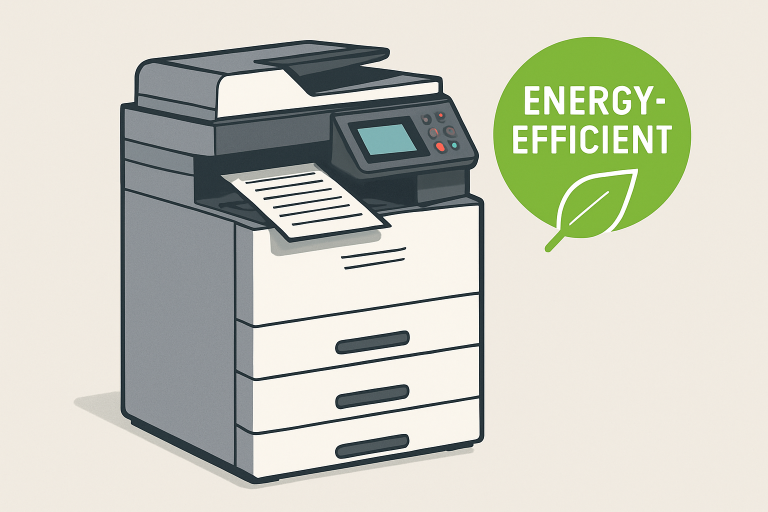
Digital printing technology introduces further energy efficiency and flexibility. On-demand printing allows businesses to print only what they need, precisely when they need it, reducing both paper waste and the energy required for unnecessary print runs. Smaller, more efficient printers also minimize excess energy consumption, supporting an eco-friendly office environment. More about these evolving technologies can be found in educational materials from the U.S. Environmental Protection Agency.
Implementing Cloud Printing Solutions
Cloud printing streamlines print management while also reducing a company’s energy and resource use. Instead of relying on on-premises servers, cloud solutions enable remote document processing, reducing the need for dedicated hardware and lowering overall energy use. These systems also support robust features such as pull printing, which prevents unnecessary waste by ensuring documents are produced only when users are at the printer. This minimizes unclaimed prints, reducing both costs and the amount of discarded paper.
Recycling Toner and Ink Cartridges
Ink and toner cartridges are significant contributors to landfill waste, where they can take centuries to decompose. Many manufacturers and office supply stores offer cartridge recycling programs that let businesses responsibly return used cartridges. Recycling helps recover valuable materials for reuse, decreasing the need for raw materials and lowering energy costs associated with new cartridge production. Some companies even provide incentives for cartridge returns, supporting both the environment and organizational budgets.
Utilizing Eco-Friendly Inks
Switching to vegetable-based or soy-based inks is a key step for organizations looking to reduce their reliance on petroleum-based inks, which are significant sources of VOC emissions. Eco-friendly inks produce fewer emissions, are less toxic, and also enhance the recyclability of printed paper. By improving the de-inking process during recycling, these inks make it easier for paper to be efficiently reused and reduce overall chemical pollution. Making the transition to environmentally responsible inks is a straightforward way to improve sustainability in business printing.
Monitoring and Reducing Print Volume
Setting policies and tools to monitor print volume empowers organizations to take control of unnecessary printing. Instituting default double-sided printing, setting black-and-white printing as the default, and promoting digital alternatives for document sharing significantly reduced resource consumption. Digitizing internal communications, contracts, and archival records reduces reliance on paper and ink, helping organizations cultivate greener workplaces and cut costs.
Educating Employees on Sustainable Practices
Internal education is vital for the success of any sustainability initiative. Providing staff with training about why and how to reduce their printing footprint encourages consistent, long-term improvements. When employees understand the environmental impact of their actions and have access to easy-to-follow guidelines, the transition to sustainable printing practices becomes seamless. Creating a culture of responsibility and awareness fosters the widespread adoption of environmentally friendly office practices.
Conclusion
Reducing the environmental footprint of business printing is achievable when companies commit to holistic and practical solutions. From mindful material sourcing and investments in energy-efficient technology to cartridge recycling, eco-friendly inks, robust digital monitoring, and staff education, every step plays a role in minimizing environmental harm. Together, these actions foster a responsible and resource-conscious approach that benefits businesses and the planet alike.