

A backyard pool can be a major selling point, but it is also a separate system with its own structure, plumbing, electrical equipment, safety features, and ongoing costs. Before removing contingencies, buyers should look beyond the water’s appearance and arrange a pool inspection and certification Orange County homeowners can use to understand the pool’s present condition.
A focused pool review helps turn uncertainty into practical information. It can identify safety issues, reveal equipment nearing the end of its useful life, and provide a clearer basis for requesting repairs, credits, specialist evaluations, or changes to the purchase terms.
Why A Pool Inspection Matters Before Closing
A clean deck and sparkling water do not prove that a pool is safe, leak-free, or operating correctly. Pumps may be noisy, heaters may fail to ignite, plumbing may be losing water underground, and a gate may not latch reliably. Small defects can become expensive after closing, especially if several aging components need replacement at once.
Think of the inspection as a decision-making tool rather than a demand for perfection. A well-maintained older pool may still be a good fit, while a newer-looking pool with safety deficiencies, significant cracking, or inoperable equipment may require closer scrutiny.
What A Standard Home Inspection May Miss
A home inspection may note visible pool issues but is limited. A pool-focused inspection checks accessible components and notes conditions at the time. According to the American Society of Home Inspectors, standards include finishes, equipment, electrical parts, barriers, and drainage. Buyers should verify what will be tested, as some parts may be inaccessible, shut down, or lack power or gas. Visual inspection can’t confirm hidden plumbing, leaks, water chemistry, or the pool shell’s integrity.
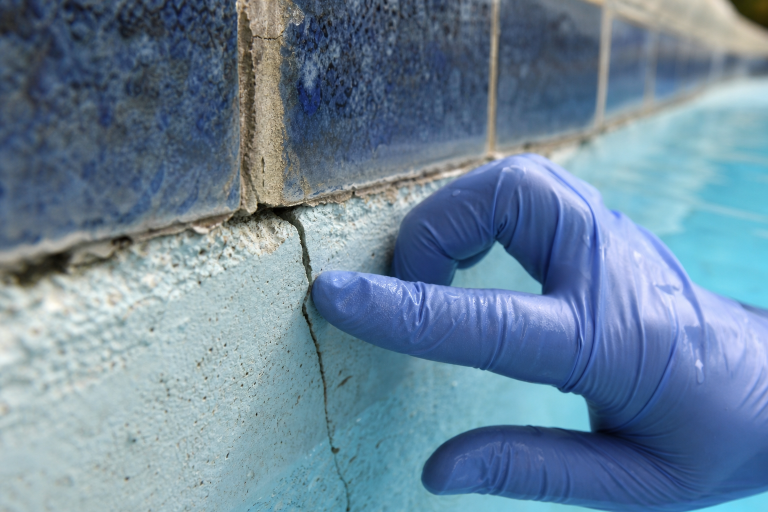
Check The Pool Structure And Surfaces
Review the shell, plaster, tile, coping, steps, and surrounding deck in daylight. Hairline surface cracking can sometimes be cosmetic, but wider cracks, displaced tile, uneven coping, or lifted concrete can indicate movement, water intrusion, or a trip hazard. Note stains, rough plaster, exposed aggregate, and areas where the finish appears thin or deteriorated.
- Look for cracked, loose, or missing tile and coping.
- Check the deck for uneven sections, settlement, and poor drainage.
- Watch for moisture damage near the spa, pool edge, and equipment pad.
- Ask whether resurfacing, crack repair, or deck work has been completed before.
Review Equipment, Plumbing, And Drainage
The equipment pad often tells the clearest story about maintenance. Run the circulation system when possible and listen for grinding, rattling, excessive vibration, or unusually loud operation. Check the pump, filter, pressure gauge, valves, visible pipes, and connections for corrosion, drips, mineral deposits, or makeshift repairs.
- Identify the age, model, and operating condition of the pump and filter.
- Inspect the heater for corrosion, leaks, damaged controls, or venting concerns.
- Look for damp soil, standing water, or staining around plumbing lines.
- Ask whether equipment has been replaced, repaired, bypassed, or left inoperative.
- Review grading and drainage so runoff does not flow toward the pool or equipment.
Examine Electrical Systems And Heating Equipment
Pool electricity requires special attention. Buyers should never open electrical panels, handle damaged wiring, or attempt their own tests. Instead, ask whether visible bonding, grounding, ground-fault circuit interrupter protection, lights, timers, automation controls, and equipment connections were reviewed. Rust, missing covers, exposed wires, damaged cords, and nonworking lights deserve prompt professional evaluation.
Heating equipment should also be operated only when conditions allow. Confirm that the heater responds to normal controls, and request a specialist assessment if there are gas odors, leaks, corrosion, ignition problems, or suspicious venting conditions.
Inspect Fences, Gates, Covers, And Safety Features
Safety barriers are essential, particularly where children may live or visit. Requirements vary by city, county, and state, so buyers should verify local rules rather than assume a national checklist applies. The Consumer Product Safety Commission’s Pool Safely guidance reinforces the importance of layers of protection around residential pools.
- Test whether the gates self-close and latch securely.
- Check for fence damage, gaps, climbable objects, and easy access points.
- Review covers, anchors, ladders, alarms, and door protection devices.
- Look for unsafe access from decks, windows, nearby structures, or pet doors.
Look Beyond Clear Water
Clear water is encouraging, but it is not a complete condition report. Ask about recent service, chemical balancing, closures, draining, and periods when the pool was unused. Review water level, waterline staining, skimmers, returns, drains, and visible fittings. Unexplained water loss, heavy scale buildup, algae, or poor circulation may indicate a maintenance issue or a need for a more substantial repair.
Ask For Permits, Receipts, And Maintenance Records
Records help fill gaps that a visual inspection cannot answer. Request permits for the original installation and later additions, plus receipts for resurfacing, equipment replacement, plumbing work, leak repair, or structural repairs. Warranties, service agreements, insurance claims, and equipment model information can help establish age, maintenance history, and likely upcoming costs. Missing paperwork is not automatic proof of a defect, but it is a reason to ask more questions.
Pool Problems That Deserve Extra Attention
High-Priority Concerns
- Exposed wiring, damaged electrical equipment, or other electrical hazards.
- Unsafe barriers, gates, covers, ladders, or access points.
- Active leaks, major water loss, severe cracking, or signs of structural movement.
- Equipment that cannot be safely operated.
Medium-Priority Concerns
- Worn pumps, filters, heaters, lights, timers, or control panels.
- Damaged tile, coping, decking, or drainage conditions.
- Heavy staining, scale, or notable surface deterioration.
Lower-Priority Maintenance Items
- Minor cosmetic stains, faded labels, and routine cleaning needs.
- Small areas of surface wear that do not currently affect safe operation.
How Buyers Can Use The Inspection Report
Read the report summary first, then separate urgent safety concerns from cosmetic issues. Obtain repair estimates for major findings and follow recommendations for specialist evaluation. Compare expected costs with the property’s value, the purchase terms, and the time remaining in the inspection period. A report is not a warranty against future failures, but it provides a sound basis for an informed negotiation.
Questions To Ask Before The Inspection
- Which pool components will be inspected and operated?
- Will the pump, filter, heater, lights, and controls be tested?
- Are plumbing or leak tests included, or is a separate service needed?
- Will the report identify items that could not be evaluated?
- Will visible safety features be reviewed?
- Which findings require a licensed pool, electrical, or structural specialist?
- When will the written report be delivered?
Final Thoughts For Pool Buyers
A pool can bring years of enjoyment, but it also brings maintenance responsibilities and repair risk. A careful review before closing replaces guesswork with usable facts. The goal is not necessarily to find a flawless pool. It is to understand what needs attention, what it may cost, and whether the home remains the right purchase.