
Storefront entryways endure daily punishment from foot traffic, delivery carts, and sudden air pressure changes. Building managers routinely face tough technical decisions between tempered and laminated glazing when selecting safety glass for exterior doors. Understanding the mechanical differences between these two engineered materials prevents expensive maintenance oversights and keeps entrances safe.
How rapid thermal quenching alters the break pattern of tempered panes
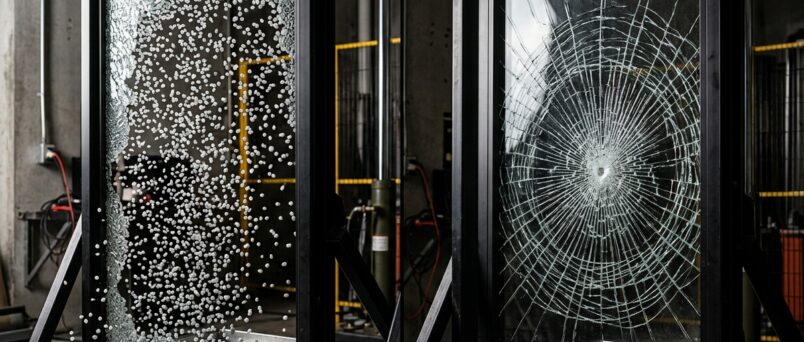
Extreme furnace heat warms standard float sheets past six hundred degrees Celsius before pressurized nozzles blast the outer surfaces. Rapid cooling forces the exterior layers to solidify while the molten core cools at a slower rate. This locked-in tension gives finished tempered panels roughly four times the bending strength of regular annealed glass. Surface impacts penetrating that compressed skin release internal energy, causing the whole panel to crumble into dull granules.
Blunt pebble fragments eliminate the dangerous dagger-like shards that cause severe lacerations during accidental workplace collisions. Thermal stress tolerance allows these heat-treated panels to endure intense direct sunlight without cracking along frame edges. Fabricators must drill lock holes and cut hinge notches before heating begins because post-temper tooling shatters the lite. Accurate field measurements taken beforehand guarantee that finished panels seat neatly into aluminum storefront doors without modifications.
Polyvinyl interlayers and the mechanics of holding broken glass in place
Laminated safety panels combine two glass sheets around an internal membrane made of flexible polyvinyl butyral resin. High-pressure autoclaves apply steady heat to melt the polymer interlayer into an optically transparent, permanent bond. Heavy impacts will shatter the outer glass lites, yet the sticky polymer core holds every fragment securely in place. Zero glass shards drop onto interior floors, protecting visitors from cutting hazards during sudden breakages.
Facilities scheduling commercial door glass replacement gain superior post-breakage security by installing these resilient composite panels. Weather elements remain outdoors because the ruptured panel continues filling the door opening rather than leaving a vacant frame. Maintenance crews can coordinate routine replacement during daylight hours instead of rushing emergency plywood board-ups after midnight. Structural sealants grab the perimeter edges firmly, creating an unbroken barrier that retains dimensional rigidity under wind load.
Which option actually stops forced entry at retail storefront doors?
Opportunistic burglars targeting retail spaces easily defeat ordinary tempered doors using spring-loaded punch tools or porcelain spark plug chips. Shattered tempered glass immediately falls away from the door frame, opening a clear pathway into sales counters within seconds. Intruders step directly through the empty opening, grab valuable electronics, and flee long before patrol officers arrive. Standard tempered entrances offer strength against direct frontal wind, yet they provide almost no resistance against targeted smash-and-grab attacks.
Tough resin interlayers absorb repeated blows from baseball bats and sledgehammers because the pliable inner plastic stretches without tearing open. Repeated strikes create dense webbed cracks across the glass face while the polymer core repels physical penetration. Frustrated criminals quickly abandon intrusion efforts after discovering that breaking the glass fails to produce an accessible entry hole. Strategic commercial glass replacement utilizing multi-ply security laminates turns vulnerable retail entrance doors into formidable physical deterrents against burglary.
Acoustic control and solar fade defense along busy pedestrian corridors
Street traffic rumble, vehicle horns, and sidewalk chatter easily transmit through monolithic commercial doors into professional corporate reception areas. Thick monolithic tempered glass vibrates like a tuning fork when struck by exterior sound waves, offering minimal acoustic dampening. Damping characteristics engineered into laminated interlayers absorb vibrational energy and dissipate airborne sound waves before crossing door thresholds. Urban offices located along bustling transit routes gain quieter conference rooms simply by upgrading entry doors to laminated glazing systems.
Harmful ultraviolet light streaming through untreated glass gradually ruins interior carpet fibers, artwork, leather furniture, and retail merchandise racks. Clear tempered lites permit up to seventy percent of damaging solar ultraviolet rays to penetrate directly into client showrooms. Specialized polyvinyl interlayers block over ninety-nine percent of incoming ultraviolet radiation without compromising daylight transmission or clarity. Protecting valuable interior merchandise from rapid sun fading preserves inventory value and eliminates early replacement expenses for display fixtures.
Why do entryway building codes distinguish between impact zones?
Strict architectural safety codes classify commercial doors and adjacent sidelites as critical impact zones subject to mandatory safety glazing rules. Federal standard CPSC 16 CFR 1201 dictates that all glass panes installed within moving door leafs must withstand category-two impact testing. Both tempered and laminated options meet these life-safety mandates because neither product produces the lethal shards of broken annealed glass. Local fire marshals frequently favor tempered glass in specific rear exit doors where emergency response personnel might need quick breach capability.
Coastal municipalities enforce hurricane-rated building regulations that mandate impact-resistant laminated glazing to stop flying lumber and windblown projectiles. Property managers seeking reliable commercial glass replacement near me must consult experienced glazing contractors who know regional municipal building mandates. North Alabama Glass offers the specialized fabrication knowledge, code compliance guidance, and skilled field crews needed to handle complex commercial door upgrades. Evaluating your property’s daily pedestrian volume, security risks, and acoustic needs ensures you select the perfect glazing system for lasting performance.