
Key Takeaways
- Choose feathers based on the project’s needs for structure, softness, movement, color, and scale.
- Length, stiffness, barb texture, condition, and consistency matter as much as appearance.
- Natural variation can enhance artistic work, while matched sets are usually better suited to symmetrical designs.
- Responsible sourcing and thoughtful storage help protect both the material and the finished project.
Feathers can add texture, movement, contrast, and a handmade quality that is difficult to reproduce with many other materials. The best choice starts with the finished project: a soft, airy trim behaves very differently from a firm wing feather intended to hold a defined silhouette.
For crafters, designers, and fly tiers comparing materials for larger projects, turkey feathers from W.W. Swalef & Son, LLC can be a useful specialist resource. This Madera, California-based supplier organizes an online catalog around options including turkey wing feathers, turkey marabou, natural turkey feathers, and plumage feathers, making it easier for buyers to compare styles when planning bulk orders or coordinated projects.
Why Feather Choice Matters
Feathers vary widely in width, flexibility, fiber density, length, and natural markings. A soft feather with loose barbs may bring gentle movement to a headpiece or wreath, while a firmer feather can make a cleaner line in a mounted display, ornament, or fly pattern. Selecting for function before color reduces trimming, breakage, and unused leftovers.
For example, a moving costume accessory benefits from light, flexible materials that lift and sway without adding too much weight. A detailed wall piece may need straighter, sturdier feathers that stay positioned after gluing or framing. One material is not universally better than another. It is better only when it fits the job.
Match The Feather To The Project
Art And Craft Projects
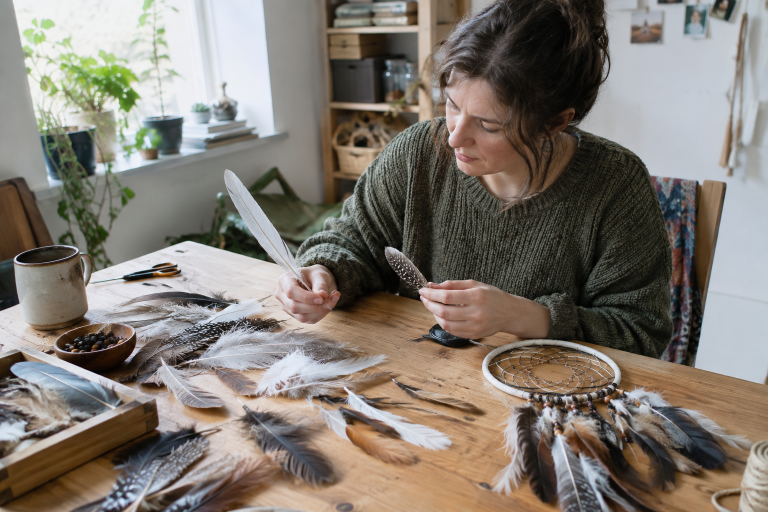
For collages, wreaths, ornaments, greeting cards, dream catchers, and mixed-media work, check the feather’s width and surface texture before choosing an adhesive. Fine feathers can disappear beneath heavy glue, while broad feathers may need support at the quill. Small differences in color or pattern often create depth, making natural variation an advantage rather than a defect.
Fashion, Costume, And Millinery
Fashion projects require attention to movement, weight, balance, and how the feathers look under indoor and outdoor lighting. Layering lighter feathers can create volume without making a hat, collar, or garment feel overloaded. Test a small sample before attaching anything to finished fabric, especially if the garment will be worn repeatedly. When a style has traditional or ceremonial roots, avoid presenting it as a costume and approach its cultural context with respect.
Fly Tying And Angling Projects
Fly tiers typically consider fiber length, taper, stiffness, and action in water. Color matters, but it should not be the only deciding factor. A pattern may call for a feather that creates a particular profile, tail, wing, collar, or flowing motion. Keeping small materials sorted by type and size makes it faster to find suitable pieces at the vise.
Key Feather Features To Compare
- Length: Longer feathers create reach, drama, or a larger visual profile. Shorter pieces work well for detail and coverage.
- Stiffness: Firm fibers hold their shape, while softer fibers allow movement and a fuller appearance.
- Barb structure: Closely set barbs can look smoother and more defined. Looser barbs can look airy, textured, or plush.
- Color and markings: Natural striping, speckling, and tonal shifts can become a focal point in a design.
- Uniformity: Matching lengths and shapes are helpful for pairs, symmetrical costumes, and repeated decorative elements.
- Condition: Inspect for crushing, strong odors, staining, excessive fraying, or damaged quills before use.
Sourcing, Wildlife Rules, And Responsible Buying
Ask where the feather materials come from and whether the seller clearly identifies their type and origin. The history of fashion has included damaging demand for wild bird plumage, and the history of feather protection laws shows why wildlife protection became necessary. Avoid collecting or buying feathers with unclear origins, particularly when protected wild birds may be involved.
It is also useful to ask whether a material is reclaimed, naturally molted, a farm byproduct, dyed, or synthetic. Turkey feathers carry cultural significance for some Native communities, including contemporary artists reconnecting with traditional garment-making practices, as discussed in discussions of turkey feathers in traditional Native fashion. Respectful use means learning about context rather than treating culturally meaningful forms as generic decoration.
Natural And Synthetic Options
Natural feathers offer organic variation, subtle color changes, and individual texture. Synthetic alternatives can provide more consistent color, shape, and repeatability. Choose natural materials when irregularity and lifelike movement support the design. Choose synthetic materials when a project needs tightly controlled matching or an especially uniform finish.
A Simple Buying Checklist
- What is the final project, and how will the feathers be used?
- How many pieces are needed, including extras for testing or replacement?
- Should the feathers match closely, or is variation welcome?
- What length, width, and stiffness will produce the intended result?
- Will the material be handled, worn, displayed, or exposed to moisture?
- Does the seller clearly describe the feather type, quantity, and condition?
- Are storage needs, shipping timing, and replacement options understood?
Care And Storage Tips
- Store feathers in a cool, dry location away from direct sunlight.
- Use shallow boxes, paper sleeves, or divided containers to prevent crushing.
- Keep dyed materials separate from natural materials when practical.
- Handle feathers by the quill instead of pulling on delicate barbs.
- Use gentle air or a soft brush to remove loose dust.
- Inspect stored materials before beginning a project, especially after long storage.
Common Mistakes To Avoid
- Choosing solely by color and overlooking structure or durability.
- Ordering too few feathers for coverage, matching, or replacements.
- Using a heavy adhesive that bends, stains, or flattens the material.
- Mixing soft decorative fibers with projects that require firm structure.
- Storing feathers beneath heavy books, fabric, or supplies.
- Assuming every online listing provides enough sourcing information.
Common Questions
What Feather Type Is Best For Beginners?
Moderate-length feathers that are easy to trim and attach are a practical starting point. Buy a small assortment first so you can compare handling and appearance before committing to a large project.
Should Feathers Match Exactly?
Exact matching helps formal, symmetrical, or repeated designs. Mixed lengths, markings, and tones often work better for rustic, artistic, and layered work.
Can Feathers Be Cleaned?
Follow the seller’s care guidance. Aggressive washing, heat, rubbing, or harsh chemicals can damage delicate barbs and change the feather’s shape.
How Many Feathers Should A Project Include?
Create a rough layout first, then add a reasonable allowance for overlap, testing, and replacements. This helps prevent both shortages and unnecessary waste.
Are Natural Feathers Always Better Than Synthetic Ones?
No. Natural materials provide distinct texture and movement, while synthetic materials may be easier to match in color and shape. The right choice depends on the design, handling needs, and desired finish.
Conclusion
Choosing the right feather starts with the project, not the product label. Compare length, texture, stiffness, color, condition, and sourcing before buying. A deliberate selection process makes materials easier to use, reduces waste, and helps each finished piece look purposeful.