
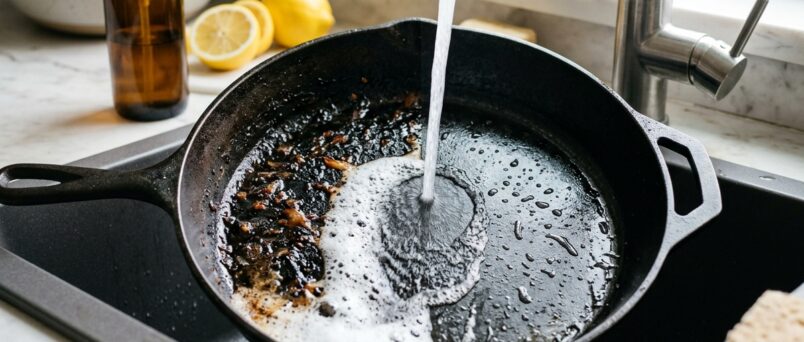
If you have ever stared at a greasy frying pan and wondered whether a plant-based dish soap can really do the job, you are asking the right question—and as eco-cleaning specialists at https://ecofriendlyparty.com/ often warn, sustainability only matters if the cleaner actually performs. Nobody wants to trade a lower-waste bottle for ten extra minutes of scrubbing.
The good news is that plant-derived cleaning agents can absolutely remove grease. The important caveat is that “plant-based” is a sourcing description, not a guarantee of cleaning strength. Performance depends on the surfactant system, concentration, water temperature, contact time, agitation, water hardness, and the type of grease you are trying to remove.
That is why searches for an
The Short Answer: Yes, But Chemistry Matters
Plant-based dish soap can remove grease because grease removal is fundamentally a surfactant problem.
Surfactant molecules have a water-loving part and an oil-loving part. The oil-loving portion interacts with greasy material while the water-loving portion remains compatible with water. In a wash solution, surfactants loosen oily soil from a surface, disperse it into smaller droplets or assemblies, and carry it away during rinsing.
This mechanism is not exclusive to petroleum-derived ingredients. A surfactant’s ability to clean depends on its molecular structure and formulation, not on whether a marketing department calls it natural.
So when evaluating plant-based dish liquid, look beyond the phrase “plant-powered.” Ask which surfactants are doing the work, how concentrated the formula is, and whether the product has credible evidence or certification behind its environmental claims.
How Dish Soap Actually Cuts Grease
Here is the simple chemistry.
Grease and oil do not mix well with water. If you rinse a greasy pan with water alone, the water tends to slide around the oil rather than carry it away.
Surfactants change that behavior. They reduce interfacial tension and interact with both water and oily material. At sufficient concentration, surfactant molecules can form structures called micelles, with water-compatible groups facing outward and oil-compatible portions associated with the interior. As a result, the detergent disperses greasy material in the wash water and removes it during rinsing.
This is why surfactant selection matters more than whether a soap produces a mountain of foam. A formula can generate lots of bubbles without necessarily delivering better grease removal.
For a deeper sustainability context, resources about
Why Plant-Derived Does Not Mean Weak
Some consumers associate “natural” with gentle but ineffective. That is an outdated assumption.
Manufacturers can use plant-derived feedstocks to make high-performing surfactants. Alkyl glucosides, for example, commonly derive from plant-based raw materials, and formulators frequently use them in cleaning products. Formulators can also combine other plant-derived or bio-based surfactants to balance grease cutting, wetting, foam, rinsability, and skin feel.
The important word is formulation. One surfactant rarely does everything perfectly. Manufacturers may combine surfactants with different properties, adjust pH, control viscosity, add builders or chelating agents, and optimize the concentration.
This also explains why two “natural dish soaps” can perform very differently. Their ingredient families may sound similar while the formulation architecture is not.
Temperature Makes a Difference
Warm water often helps with greasy dishes because many fats and oils become less viscous as temperature rises. That can make soils easier to loosen and remove.
But hot water is not a requirement for every dish. A well-formulated surfactant system can still clean effectively at lower temperatures, especially when you allow adequate contact time and use mechanical action.
For an especially greasy pan, try this sequence: scrape off excess fat, add a small amount of dish soap, use warm water if appropriate for the cookware, let the solution sit briefly, and then scrub with a suitable sponge or brush. Rinse thoroughly.
This approach is more efficient than simply adding more soap. It also reduces the amount of product that ultimately enters the wastewater stream.
Water Hardness Can Change Results
If your dish soap seems to behave differently from one home to another, water chemistry may be part of the explanation.
Hard water contains dissolved minerals such as calcium and magnesium. Traditional soaps can react with these ions and form less-soluble materials, which can produce soap scum. Modern detergent formulations work more consistently in hard water by using surfactants and other ingredients chosen to manage the conditions.
That means a plant-based dish liquid that works brilliantly in soft water may underperform in a hard-water home unless its formula accounts for those conditions.
If you notice film, poor rinsing, or reduced lather, do not immediately conclude that plant-based cleaning agents are ineffective. Consider water hardness, dosage, and whether the cookware itself has a textured or highly soiled surface.
Foam Is Not the Same as Cleaning Power
A thick layer of bubbles can make a product feel powerful, but foam and grease removal are not the same measurement.
Surfactant type, concentration, water chemistry, agitation, and additives influence foam. Oil itself can change foam behavior. A product can clean efficiently without producing dramatic suds, while another can foam heavily without being better at removing baked-on grease.
This is one of the most common content gaps in consumer articles. They often use “lots of foam” as a visual shortcut for effectiveness. A better test is practical: How much product do you need? How quickly does it loosen grease? Does the pan rinse cleanly? Does it leave a film? Can the same dose handle a normal load of dishes?
Those are the performance questions worth asking.
How to Test Plant-Based Dish Soap at Home
You do not need a laboratory to compare dish liquids fairly.
Choose three repeatable messes: a light oil film on a plate, a greasy frying pan, and a dried food residue. Use the same water temperature, the same sponge, the same approximate amount of soil, and the same amount of soap for each product.
Record four things:
- How much soap you used.
- How long you scrubbed.
- How much water you used to rinse.
- Whether the surface was actually clean afterward.
You can then compare cleaning efficiency rather than relying on scent, bottle design, or foam.
For a more rigorous comparison, repeat each test several times. One difficult pan is not enough evidence to declare one formula superior.
What About Seventh Generation Dish Liquid?
Seventh Generation’s dish liquid pages provide a useful real-world example of a plant-based grease-fighting formula. The Fresh Lime & Ginger version lists sodium lauryl sulfate, lauramine oxide, and decyl glucoside as cleaning agents and describes the formula as plant-based and designed to fight grease and dried-on food. The page also identifies EPA Safer Choice and USDA Certified Biobased credentials.
The important lesson is not that one brand proves every plant-based dish soap works equally well. Instead, it shows what transparent product information looks like: the manufacturer identifies the functional ingredients, explains the product’s intended performance, and provides certification information.
If you are evaluating a specific product, a detailed
When Plant-Based Dish Soap May Struggle
Even a strong dish liquid has limits.
Baked-on starch, polymerized oil, carbonized food, and thick layers of animal fat can require soaking, heat, mechanical scrubbing, or a different cleaning chemistry. You should not expect any dish soap to dissolve every cooking residue instantly.
Cookware material matters too. Clean nonstick coatings according to the manufacturer’s instructions, but maintain cast iron differently. A cleaner that removes grease aggressively may not be appropriate for every surface.
The practical solution is to match the cleaning method to the soil. Scrape first. Soak when necessary. Use the correct tool. Give the surfactant time to work. Then rinse. That approach is usually more sustainable than repeatedly adding more product.
How to Get Better Grease Removal With Less Soap
A few technique changes can make almost any effective dish soap work harder.
First, remove bulk grease before water touches the pan. A paper towel or reusable scraper can prevent a large amount of oil from entering the wastewater.
Second, apply soap to the sponge or dish rather than flooding the sink with detergent. This gives you better control over concentration at the soil.
Third, let the surfactant contact the grease before you scrub aggressively. Contact time can reduce the mechanical effort required.
Fourth, use warm water when appropriate. Fifth, rinse efficiently rather than leaving the tap running continuously.
These habits reduce product waste and can be especially valuable for households that wash many dishes by hand.
Conclusion
Can plant-based dish soap remove grease? Yes. The chemistry of grease removal depends on surfactants and formulation, not on whether a product sounds conventional or natural.
A good plant-based dish liquid can wet greasy surfaces, interact with oil, disperse the soil, and help carry it away in rinse water. What changes from product to product is how efficiently the formulation does that under real household conditions.
If you are choosing a greener dish soap, test performance rather than trusting marketing. Look at the actual surfactants, use a consistent cleaning method, consider water hardness and temperature, and measure how much product you need per load.
The best eco-friendly dish soap is not the one with the prettiest label. It is the one that gives you reliable cleaning with a transparent formulation, sensible environmental credentials, and a small enough dose that the product lasts.
Frequently Asked Questions
Can natural dish soap cut through grease?
Yes. Grease removal depends on surfactants and formulation. Plant-derived surfactants can interact with oily soils and help disperse them into rinse water.
Why does some plant-based dish soap seem weaker?
Surfactant blend, concentration, water hardness, temperature, and soil type affect performance.
Does more foam mean better grease removal?
No. Foam is not a direct measure of cleaning performance. Compare the amount needed, scrubbing time, rinsing, and actual soil removal instead.
Should I use hot water with plant-based dish soap?
Warm water can help with many greasy soils, but the best temperature depends on the cookware and product. Avoid temperatures that could damage the surface.
What is the best way to wash a very greasy pan?
Remove bulk grease first, apply a small amount of dish soap, allow brief contact time, use appropriate warm water, scrub with a suitable tool, and rinse efficiently.
Call to Action
Ready to make a smarter switch? Compare the dish soap you use now with the checklist in this guide, verify the ingredients and environmental claims, and choose the option that best fits your household. If this guide helped you, share it with someone who is trying to reduce waste, improve cleaning-product choices, or make their kitchen routine more sustainable.
Sources for Fact-Checking
- S. EPA — Safer Choice Standard
- S. EPA — Safer Choice criteria for surfactants
- S. EPA — Septic system care
- FTC — Environmental Claims / Green Guides
- Seventh Generation — Dish Liquid
- Chemistry LibreTexts — Surfactants and micelles
- ACS — Counteracting Interfacial Energetics for Wetting of Hydrophobic Surfaces