
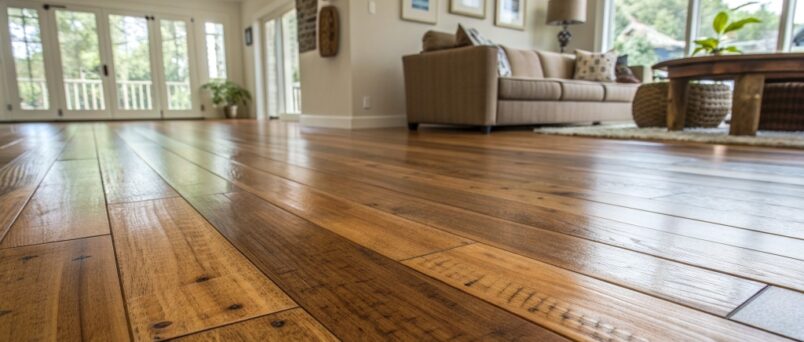
Choosing the right flooring blends style with sustainability, offering eco-friendly options like bamboo, reclaimed wood, recycled tiles, and responsibly sourced materials. These choices reduce waste, emissions, and support responsible resource management. Incorporating natural and recycled materials enhances your space and minimizes your carbon footprint, providing durable, beautiful, and eco-conscious solutions. Thorough research and expert guidance are vital to making informed, environmentally responsible decisions.
Bamboo Flooring
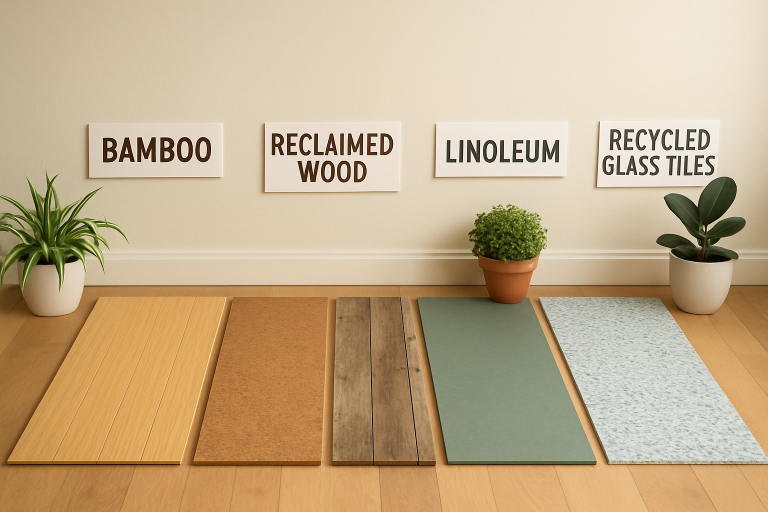
Bamboo stands out among green flooring materials for its remarkable renewability. Growing to maturity in just three to five years—unlike hardwoods requiring decades—bamboo can be harvested repeatedly from the same plant. It’s inherently durable and moisture-resistant, making it suitable for busy households. Additionally, bamboo’s clean lines and natural color variations bring a contemporary yet organic look to any room. Like hardwood floors engineered, bamboo offers both style and resilience, making it a versatile choice for sustainable home design.
Cork Flooring
Cork offers a unique combination of comfort and sustainability. Harvested from the living bark of cork oak trees—which naturally regenerates—cork production causes no harm to the tree and supports continued growth. This material is praised for its cushioning underfoot, thermal insulation, and sound absorption, making it ideal for cozy spaces like living rooms and bedrooms. The subtle, organic patterns of cork add a warm, inviting character to interiors, while its resistance to mold, mildew, and insects boosts indoor air quality.
Reclaimed Wood
Reclaimed wood flooring infuses your home with history and character, while giving new life to vintage lumber salvaged from old barns, factories, and warehouses. Using reclaimed wood reduces demand for newly harvested timber and keeps valuable resources out of landfills. The result is a floor that boasts one-of-a-kind patinas, grain patterns, and a distinctive, storied feel. Sourcing from reputable suppliers such as Soen Hardwood ensures your reclaimed wood is sustainably processed and free of toxins or harmful finishes.
Linoleum
Often mistaken for vinyl, linoleum is a 100% natural material composed of linseed oil, wood or cork flour, and jute. Biodegradable and non-toxic, modern linoleum offers a wide range of colors and design choices, making it a practical and visually appealing solution for high-traffic areas like hallways and kitchens. Linoleum naturally inhibits bacterial growth and emits very low levels of volatile organic compounds (VOCs), contributing to healthier indoor air. As its popularity resurges, linoleum remains a classic yet progressive choice.
Recycled Glass Tiles
For shoppers seeking a dramatic and eco-conscious flooring solution, recycled glass tiles make a stunning statement. Crafted from post-consumer and post-industrial glass, these tiles prevent waste from entering landfills while producing floors that are water-resistant, easy to clean, and available in vibrant colors. Their reflective surfaces enhance natural light, making them especially popular in kitchens, bathrooms, and accent areas.
Natural Stone
Natural stone flooring, such as slate or limestone, is a timeless choice that, when sourced responsibly, offers enduring sustainability. Stone’s longevity means fewer replacements over time, and those same properties lend an elegant, organic presence to any room. The thermal mass of stone can also help regulate interior temperatures, promoting energy efficiency, especially in passive solar designs. It’s essential, however, to seek out stone suppliers dedicated to ethical and environmentally sensitive extraction practices.
FSC-Certified Hardwood
Hardwood floors remain a perennial favorite for their beauty and longevity. Choosing planks certified by the Forest Stewardship Council (FSC) guarantees the wood is harvested from responsibly managed forests. This supports biodiversity, promotes reforestation, and ensures a traceable supply chain. FSC-certified hardwood brings natural warmth and sophistication that increase your home’s value, while aligning with strong environmental standards.
Recycled Metal Tiles
Recycled metal tiles, made from aluminum and brass, offer a bold, industrial look. They recycle post-consumer metals like cans and hardware, reducing mining impacts. Besides their shine, metal tiles are durable and easy to maintain, suited for entryways, backsplashes, or feature floors. Using sustainable materials enhances home beauty and lowers environmental impact, creating healthy, distinctive, and future-focused interiors.
Conclusion
Sustainable flooring options, such as bamboo, cork, and reclaimed wood, along with other eco-conscious materials, demonstrate that style and responsibility can coexist. Each material offers unique benefits—whether it’s the renewability of bamboo, the comfort of cork, the heritage of reclaimed wood, or the innovation of recycled and natural products. By choosing these alternatives, homeowners not only elevate their interiors but also contribute to a healthier planet, ensuring that design choices today support a more sustainable future.