

Key Takeaways
- Check for danger before approaching an injured or ill person.
- Call 911 early, or assign a specific person to make the call.
- Start CPR when a person is unresponsive and not breathing normally.
- Use an AED as soon as it is available and follow its voice prompts.
- Keep first aid supplies, emergency contacts, and trained responders easy to locate.
- Practice emergency steps before a crisis arises to ensure quick action.
In Upland, California, a medical emergency can occur in a downtown office, at a youth practice, in a warehouse, or at home. Preparation helps ordinary people take useful first steps while professional responders are on the way. For groups seeking practical, hands-on instruction, adult CPR classes Upland CA, are available through All Star Safety Training, a Upland provider offering CPR and first aid education for workplace, community, home, and childcare settings throughout the surrounding area.
The goal is not to diagnose every medical problem. It is to recognize immediate danger, activate 911, and provide care that is safe and appropriate for your level of training. A calm response in the first few minutes can help maintain breathing and circulation and ensure safety until emergency crews arrive.
Why The First Few Minutes Matter
Early action matters most when breathing or circulation has stopped. The American Heart Association notes that immediate CPR can double or triple the chances of survival after cardiac arrest. Bystanders do not need perfect certainty before calling for help. If someone suddenly collapses, is unresponsive, or is only gasping, treat the situation seriously and act promptly.
Step One: Check The Scene
Do not rush into an unsafe area. Look for traffic, smoke, fire, exposed electricity, chemicals, violent behavior, unstable equipment, or other hazards. Use gloves or another barrier if blood or bodily fluids are present. Ask a nearby person to keep others back, retrieve supplies, or direct responding crews to the correct entrance. Move an injured person only if leaving them in place presents a greater immediate danger.
Step Two: Call For Help
Call 911 yourself or point to a specific person and say, “You, call 911 now.” Give the dispatcher the exact address, building name, floor, room, gate, or nearby landmark. Describe what happened and whether the person is awake and breathing normally. If possible, send someone to meet emergency crews outside.
A clear call might sound like this: “A person is unconscious and not breathing normally in the second-floor break room. The address is [address]. Someone will meet the ambulance at the front entrance.” Stay on the line and follow the dispatcher’s instructions.
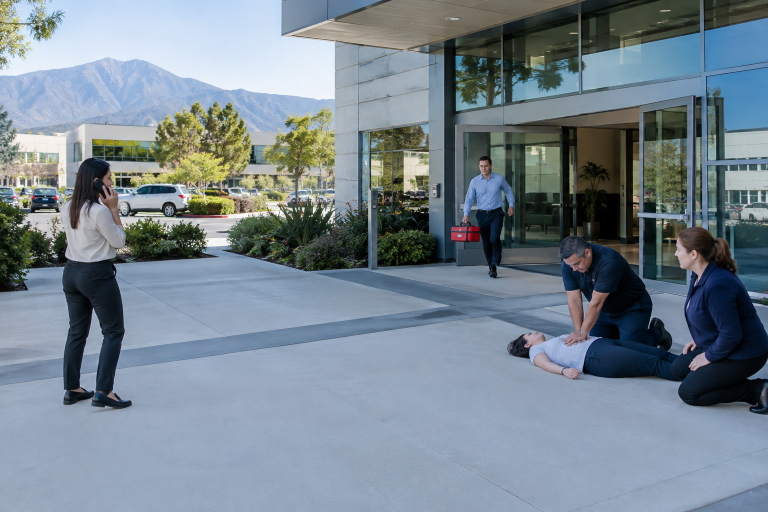
Step Three: Begin CPR And Use An AED
An adult who is unresponsive and not breathing normally, or who is only gasping, may need CPR. For a witnessed sudden collapse involving a teen or adult, Hands-Only CPR means calling 911 and pushing hard and fast in the center of the chest. People trained in conventional CPR may provide compressions and breaths when appropriate.
Send someone to get the automated external defibrillator (AED) while compressions continue. Turn it on as soon as it arrives and follow the spoken instructions. Keep everyone clear while the AED analyzes the heart rhythm or delivers a shock. CPR for infants, children, drowning victims, and suspected overdose emergencies can involve different considerations, so follow dispatcher guidance and current training.
How To Respond To Common Emergencies
Severe Bleeding
Apply firm, direct pressure with gauze, a clean cloth, or a gloved hand. If the material becomes soaked, add another layer instead of removing the first one. Call 911 for heavy, uncontrolled, or life-threatening bleeding.
Choking
If the person can respond, ask whether they are choking. Use back blows and abdominal thrusts according to current training, with modified techniques for infants and pregnant people. If the person becomes unresponsive, call 911, begin CPR, and have someone retrieve an AED.
Burns, Stroke, And Fainting
For a burn, remove the person from the heat source if safe and cool the area with clean, cool running water. Do not use ice, butter, creams, or break blisters. For possible stroke, remember FAST: face drooping, arm weakness, speech trouble, time to call 911. Note when symptoms began or when the person was last known well. For fainting or shock, help the person lie down if safe to do so, keep them warm, and monitor their breathing.
Build A Simple Workplace Emergency Plan
Emergency response should not rely on one employee remembering every detail. Upland employers, schools, gyms, and community organizations can strengthen readiness by posting the worksite address, marking the locations of first aid kits and AEDs, identifying trained responders for each shift, and planning how emergency crews will enter secured areas.
Under OSHA workplace first aid requirements, workplaces without an infirmary, clinic, or hospital in near proximity for treating injured employees must have adequately trained first aid personnel and readily available supplies. After an incident or drill, document what happened, replace used supplies, and review gaps in the plan.
Why Training And Practice Matter
Reading emergency instructions is useful, but practicing on a training manikin makes the chest-compression technique and AED use more familiar. Short drills can also help workers locate emergency exits, first aid kits, AEDs, and the best entrance for emergency crews. Include emergency orientation for new employees and match training to real risks, whether the setting is childcare, construction, a warehouse, an office, or a public facility.
Common Mistakes To Avoid
- Waiting too long to call 911 or assuming another person has already called.
- Entering an unsafe scene without checking for hazards.
- Stopping CPR because a person gasps or makes a small movement.
- Leaving to search for supplies instead of assigning the task to someone else.
- Giving food, drinks, or medication to a confused or unconscious person.
- Moving someone with a possible spine injury without an immediate safety reason.
Common Questions About Emergency Response
Should An Untrained Person Perform CPR?
Call 911 and follow the dispatcher’s instructions. For a suddenly collapsed adult, Hands-Only CPR may be appropriate if the bystander is unwilling or unable to provide rescue breaths.
How Often Should Emergency Drills Be Held?
Set a schedule that fits the workplace size, staffing, turnover, risks, and local requirements. Run an additional drill after major changes to the building, equipment, or emergency plan.
What Belongs In A First Aid Kit?
Kit contents should match the worksite’s hazards. Common supplies include gloves, dressings, gauze, antiseptic items, cold packs, burn-care materials, and emergency instructions. Higher-risk settings may require bleeding-control or specialty supplies.
A Calm Response Can Make A Difference
Emergency readiness begins before anyone is hurt or becomes ill. A clear plan, visible supplies, trained people, and regular practice can help Upland residents and workplaces respond with more confidence. The first five minutes may feel overwhelming, but checking the scene, calling 911, and providing safe care can make a meaningful difference while professional help is on the way.