
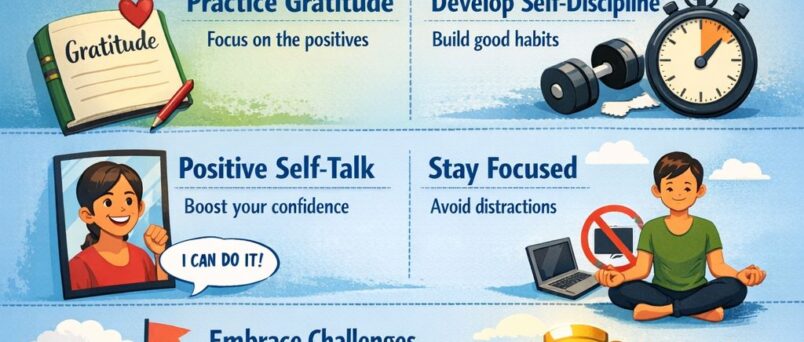
Success isn’t about talent, luck, or even hard work—not entirely. The real game-changer? The way you think. Consider this: Two people with identical skills and opportunities can end up with wildly different outcomes. One thrives, while the other stagnates. The difference? A success mindset.
Research from Stanford psychologist Carol Dweck reveals that individuals with a growth mindset outperform their fixed-mindset peers in nearly every field. They earn higher incomes, recover faster from setbacks, and even live healthier lives. Yet, most people never intentionally cultivate their mental framework. They leave their success to chance, hoping motivation will strike or circumstances will align.
Here’s the truth: A winning mindset isn’t something you’re born with. It’s something you build—deliberately, daily, and with precision. This guide isn’t about vague inspiration. It’s a step-by-step blueprint to rewire your brain for resilience, clarity, and unstoppable progress. You’ll discover mental strength tips that elite performers use. You’ll learn how to shift from self-doubt to self-mastery. And you’ll walk away with a personal growth mindset that turns obstacles into opportunities.
Whether you’re an entrepreneur, a creative, or simply someone hungry for more, your journey starts here. Let’s build a mindset that doesn’t just chase success—but attracts it.
The Science of Success: How Your Brain Shapes Your Outcomes
Your brain is a prediction machine. It constantly scans your environment, makes assumptions, and prepares you to act. However, if it’s wired for negativity or limitation, your results will reflect that. The good news? Neuroplasticity—the brain’s ability to reorganize itself—means you can reshape your thought patterns at any age.
Studies from Harvard Business Review show that individuals who practice mindset training improve their performance by up to 30%. They handle stress better, solve problems faster, and maintain focus longer. But here’s the catch: Most people focus on what they want to achieve, not how they think about achieving it.
A success mindset operates on three core principles:
- Growth Over Fixed: Believing abilities can be developed (not just inherited).
- Process Over Outcome: Focusing on effort and learning, not just results.
- Resilience Over Perfection: Viewing failures as feedback, not final judgments.
Example: Michael Jordan didn’t make his high school basketball team on the first try. His response? “I’ve missed more than 9,000 shots in my career. I’ve lost almost 300 games. Twenty-six times, I’ve been trusted to take the game-winning shot and missed. I’ve failed over and over again in my life. And that is why I succeed.” That’s the power of a winning mindset in action.
Step 1: Master Your Morning—The Keystone of Mental Strength
How you start your day sets the tone for everything that follows. Elite performers—from Navy SEALs to CEOs—don’t leave their mornings to chance. They design them.
The Non-Negotiables of a Powerful Morning Routine:
- Hydrate First: Drink a glass of water immediately upon waking. Dehydration impairs focus and energy.
- Move Your Body: Exercise releases endorphins, reduces stress, and sharpens cognition. Even a 10-minute walk counts.
- Prime Your Mind: Spend 5–10 minutes in meditation, journaling, or affirmations. This trains your brain to default to positivity.
- Fuel Strategically: Eat a protein-rich breakfast to stabilize energy. Avoid sugar crashes that derail productivity.
Example: Tim Ferriss, author of Tools of Titans, starts his day with 10 minutes of meditation, a cold shower, and a high-protein breakfast. This routine primes him for peak performance.
Pro Tip: Stack habits. Attach a new habit (like journaling) to an existing one (like brushing your teeth). This leverages your brain’s existing neural pathways for easier adoption.
Step 2: Reframe Failure—The Secret Weapon of High Achievers
Failure isn’t the opposite of success. It’s a prerequisite. Yet, most people fear it, avoid it, and let it define them. A success mindset flips the script: Failure becomes data.
How to Turn Setbacks Into Comebacks:
- Ask Better Questions: Instead of “Why did this happen to me?” ask, “What can I learn from this?”
- Normalize the Struggle: Every master was once a beginner. J.K. Rowling was rejected by 12 publishers before Harry Potter became a phenomenon.
- Fail Forward: After a setback, immediately take one small action. Momentum kills self-doubt.
Example: Sara Blakely, founder of Spanx, failed the LSAT twice before creating a billion-dollar company. She credits her success to embracing failure as a teacher.
Additionally, keep a “failure log.” Write down what went wrong, what you learned, and how you’ll apply it. This turns mistakes into stepping stones.
Step 3: Cultivate Grit—the X-Factor of Long-Term Success
Talent fades. Grit doesn’t. Angela Duckworth’s research at the University of Pennsylvania found that grit—passion plus perseverance—predicts success better than IQ or talent. But grit isn’t about brute force. It’s about strategic endurance.
How to Build Unshakable Grit:
- Define Your “Why”: Connect your goals to a deeper purpose. When motivation wanes, purpose sustains you.
- Break Goals Into Micro-Wins: Big goals overwhelm. Small wins build momentum. Aim for 1% progress daily.
- Embrace the Suck: Discomfort is the price of growth. Lean into challenges instead of avoiding them.
Example: David Goggins, former Navy SEAL, transformed himself from a 300-pound exterminator to an ultra-endurance athlete by embracing discomfort. His mantra? “Stay hard.”
Pro Tip: Use the “5-Second Rule” from Mel Robbins. When you hesitate, count down from 5 and act. This interrupts overthinking and builds mental muscle.

Step 4: Design Your Environment for Automatic Success
Willpower is overrated. Your environment shapes your behavior far more than motivation ever will. The most successful people don’t rely on discipline—they engineer their surroundings to make success inevitable.
Environment Hacks for a Winning Mindset:
- Remove Friction: Want to exercise? Lay out your workout clothes the night before. Want to read more? Keep a book on your pillow.
- Leverage Triggers: Place visual cues where you’ll see them. A vision board by your desk or a quote on your phone wallpaper keeps goals top of mind.
- Curate Your Circle: Jim Rohn famously said, “You’re the average of the five people you spend the most time with.” Surround yourself with people who elevate you.
Example: Warren Buffett spends 80% of his day reading and thinking. His environment—minimal distractions, a quiet office, and a circle of intellectual peers—supports this habit.
Additionally, audit your digital environment. Unfollow social media accounts that drain your energy. Subscribe to newsletters and podcasts that inspire growth.
Step 5: Develop Emotional Agility—the Hidden Key to Resilience
Success isn’t about avoiding negative emotions. It’s about navigating them with skill. Susan David, a Harvard psychologist, found that emotionally agile people perform better under stress, build stronger relationships, and innovate more effectively.
How to Master Your Emotions:
- Name It to Tame It: Label your emotions precisely. Instead of “I’m stressed,” try “I’m feeling overwhelmed by my workload.”
- Reframe Challenges: View obstacles as temporary and solvable. Ask, “What’s one thing I can do right now to improve this?”
- Practice Self-Compassion: Treat yourself like you would a friend. Self-criticism paralyzes; self-compassion empowers.
Example: Oprah Winfrey attributes her success to emotional awareness. She starts each day by asking, “What is my intention for today?” This centers her mindset.
Pro Tip: Use the “10-10-10 Rule” when stressed. Ask: “Will this matter in 10 days? 10 months? 10 years?” This adds perspective.
Step 6: Adopt the Habits of Ultra-Successful People
Success leaves clues. The most accomplished individuals share specific daily habits that reinforce their success mindset.
Non-Negotiable Habits of High Achievers:
- Lifelong Learning: Read 30 minutes daily. Warren Buffett, Bill Gates, and Elon Musk all prioritize learning.
- Consistent Action: Show up every day, even when unmotivated. Small, consistent efforts compound over time.
- Gratitude Practice: Write down three things you’re grateful for each night. This rewires your brain for positivity.
- Digital Detox: Take regular breaks from screens. Constant connectivity fragments focus.
Example: Arianna Huffington’s success secret? Sleep. She prioritizes 7–8 hours nightly, calling it her “performance enhancer.”
Additionally, review your day each evening. Ask: “What went well? What could I improve?” This creates a feedback loop for continuous growth.
Step 7: Use Visualization to Program Your Brain for Success
Your brain can’t distinguish between vivid imagination and reality. That’s why visualization is a staple among Olympians, CEOs, and artists. It primes your mind for success before you even take action.
How to Visualize Like a Pro:
- Be Specific: Don’t just imagine “success.” Picture the exact steps, sounds, and emotions of achieving your goal.
- Engage All Senses: What do you see, hear, and feel in your success scenario? The more vivid, the more effective.
- Pair with Action: Visualization isn’t magic. It’s a tool to clarify and motivate action.
Example: Michael Phelps visualized every detail of his races—down to the water’s temperature—before winning 23 Olympic gold medals.
Pro Tip: Spend 5 minutes each morning visualizing your day unfolding perfectly. This sets a mental blueprint for success.
Real-World Examples of a Success Mindset in Action
- Elon Musk: His mindset secret? “When something is important enough, you do it even if the odds are not in your favor.” This belief drove Tesla and SpaceX through countless failures.
- Serafin Gomez: A former janitor turned millionaire, Gomez credits his success to a “no excuses” mindset and relentless learning.
- J.K. Rowling: She wrote Harry Potter in cafés while on welfare. Her mindset? “Rock bottom became the solid foundation on which I rebuilt my life.”
Professional Tips to Build an Unbreakable Success Mindset
- Start Small: Build confidence with tiny wins. Completed a task? Celebrate it.
- Embrace Discomfort: Growth happens outside your comfort zone. Seek challenges daily.
- Focus on Progress, Not Perfection: Done is better than perfect. Aim for consistency over flawlessness.
- Use Power Language: Replace “I have to” with “I choose to.” This shifts your mindset from obligation to empowerment.
- Review Weekly: Every Sunday, ask: “What did I learn? How can I improve?” Adjust accordingly.
Related Topics:
- Which of These Are Characteristics of a Successful Entrepreneur Mindset?
- Lifelong Learning Strategies for Busy Professionals
- How to Regain Drive After a Career Setback or Rejection
7 FAQs About Building a Success Mindset
- How long does it take to develop a success mindset?
Mindset shifts happen with consistent practice. Most people see changes in 30–90 days, but it’s a lifelong journey. - Can anyone build a winning mindset, or is it innate?
Anyone can develop it. Neuroplasticity proves your brain can rewire itself at any age. - What’s the biggest mistake people make when trying to improve their mindset?
Focusing only on positive thinking. A success mindset acknowledges challenges but chooses empowering responses. - How do I stay motivated when results are slow?
Focus on the process, not the outcome. Celebrate small wins and trust the compound effect. - Is a success mindset only for entrepreneurs or career-driven people?
No. It applies to parents, students, artists—anyone who wants to grow and overcome challenges. - How can I handle self-doubt and imposter syndrome?
Normalize it. Everyone feels it. Use it as a signal to prepare more, not to quit. - What’s the first step to building a success mindset?
Awareness. Notice your current thought patterns. Then, choose one mental strength tip from this guide and practice it daily.
Conclusion: Your Mindset Is Your Greatest Competitive Advantage
A success mindset isn’t about never feeling fear, doubt, or frustration. It’s about developing the mental tools to navigate those emotions and keep moving forward. It’s the difference between seeing obstacles as stop signs or as detours to something better.
Remember: Your thoughts shape your actions. Your actions shape your results. And your results shape your life. The good news? You’re already on the path. You’ve taken the first step by seeking knowledge. Now, it’s time to apply it.
Your challenge this week: Pick one strategy from this guide. Implement it today. Then, observe how it shifts your energy, focus, and results. Success isn’t a destination—it’s a daily practice. Start building your mindset now, and watch how your world transforms.
The question isn’t if you can develop a winning mindset. It’s how soon you’ll start. What’s your first move?