
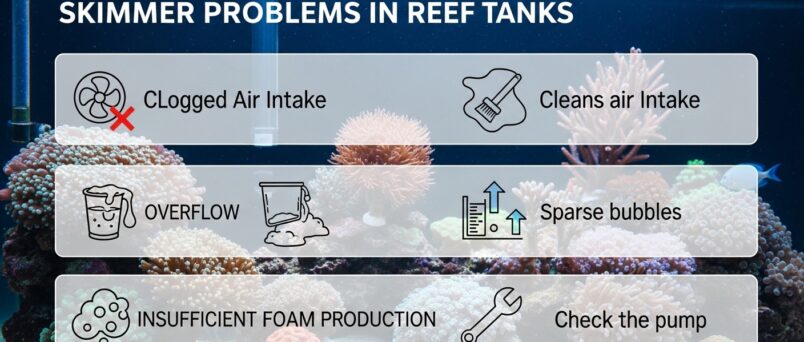
Protein skimmers are essential equipment in reef tanks, playing a crucial role in maintaining water quality by removing dissolved organic compounds. However, even the most reliable skimmers can develop issues, leading to frustration and declining tank health. How do you fix common protein skimmer problems? Quick identification and targeted troubleshooting are key. In this guide, we’ll walk you through the most frequent skimmer issues, how to diagnose them, and effective ways to restore peak performance. Keep your reef thriving by mastering skimmer maintenance and repair.
What are the most common protein skimmer problems in reef tanks?
The most common protein skimmer problems in reef tanks include overflowing collection cups, no foam production, inconsistent skimming, loud noises, frequent shut-offs, microbubble leaks, and poor performance after cleaning. Understanding these symptoms helps you troubleshoot and maintain optimal water quality.
Let’s break these down:
- Overflowing Collection Cup: Excessive skimmate collects rapidly, spilling or shutting off the skimmer.
- No Foam Production: Skimmer produces very little or no foam in the reaction chamber.
- Inconsistent Skimming: Skimmate quality or quantity fluctuates with no obvious reason.
- Loud Noises: Rattling, humming, or whistling sounds indicate mechanical or installation problems.
- Microbubble Leaks: Tiny bubbles escape into the display tank, irritating corals and reducing water clarity.
- Poor Performance After Cleaning: The skimmer fails to perform well after routine or deep cleaning.
Each of these issues has specific causes, which we’ll troubleshoot below.
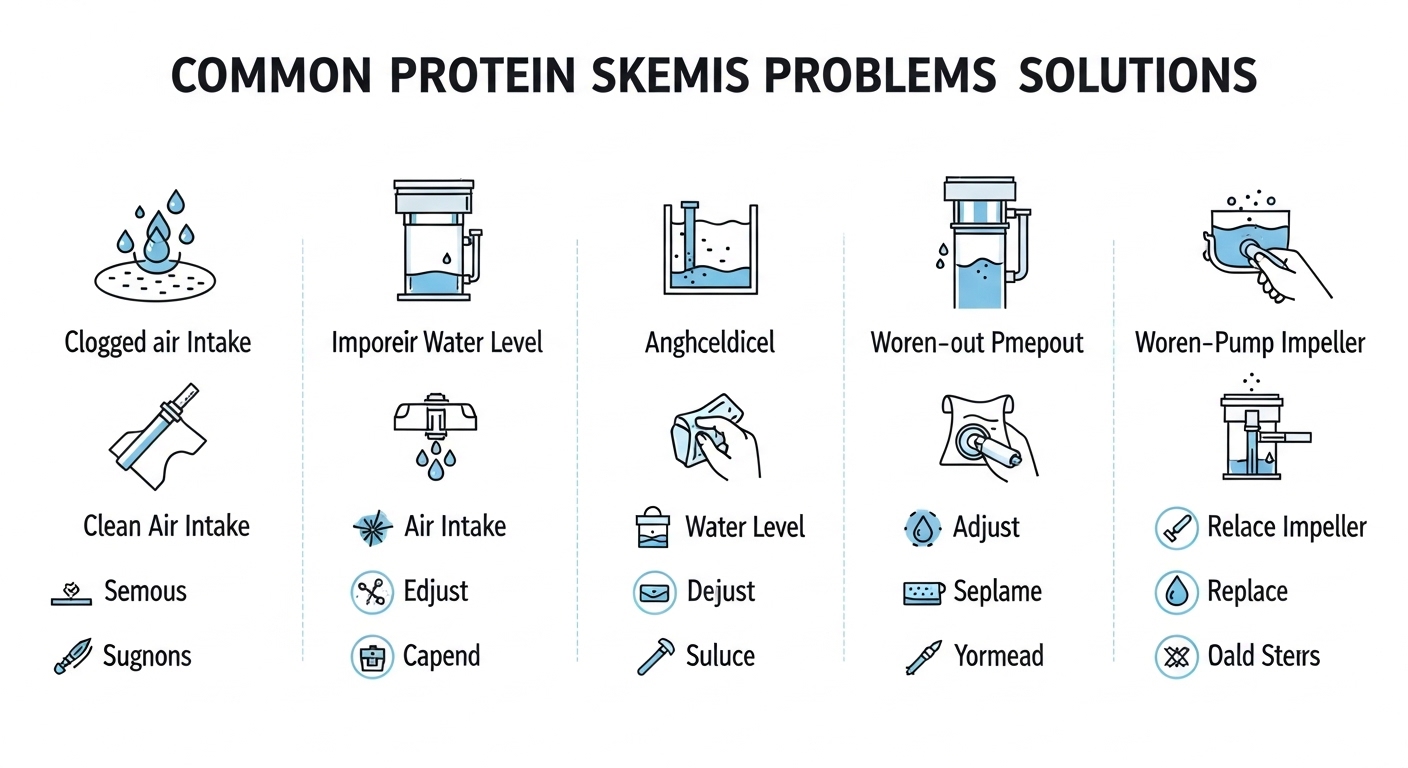
Why is my protein skimmer overflowing and how do I fix it?
A protein skimmer may overflow due to overfeeding, recent additives, a new skimmer break-in period, or a misadjusted water level. Fix this by lowering the water level in the skimmer, adjusting the air intake, performing a water change, or waiting out the break-in.
Overflowing is one of the most alarming protein skimmer issues. It creates a mess and sometimes dumps waste right back into your tank. Most often, overflowing is linked to:
- Recent water additives, conditioners, or medications (like dechlorinators)
- Overfeeding, especially with oily or high-protein foods
- Incorrect skimmer adjustment (too much air, high water level)
- A freshly cleaned or brand-new skimmer
Solution: First, turn off the skimmer and clean up the overflow. Restart it with the water level lower in the reaction chamber. Wait 24-48 hours after adding products to let them dissipate. If the issue persists, check for blockages in the air intake and review your tank feeding habits.
How can I restore foam when my protein skimmer stops producing bubbles?
Restore foam by checking the skimmer pump and venturi for blockages, cleaning the air intake, and ensuring the water level is correct. Dirty air tubes, worn impellers, or low water flow can all impede foam production in your protein skimmer.
Lack of foam means your protein skimmer isn’t removing organics—putting your reef at risk. Start troubleshooting here:
- Disconnect the skimmer and inspect the air intake tubing and venturi—all must be free of salt creep or debris.
- Remove the pump; check and clean the impeller. Replace if worn.
- Reassemble, ensuring water flow isn’t restricted (look for kinked hoses or clogged filters).
- Confirm the water level—in-sump skimmers may dry out from low sump water.
- Check for power supply issues or pump failure and replace components as needed.
Regular maintenance prevents most foam production problems.
What causes inconsistent performance in protein skimmers?
Inconsistent performance is usually caused by fluctuating water parameters, poor skimmer placement, pump wear, or unstable tank bioload. Stabilize your reef tank, maintain the skimmer, and ensure correct water depth to minimize erratic skimming.
A skimmer should produce dark, consistent skimmate. If yours switches from dry to wet skimmate or works well only at certain times, check these areas:
- Evaporation or top-off water changing sump levels
- Pump or airline blockages
- Positioning too close to the return outlet or fluctuating sump flow
- Sporadic cleaning of the collection cup and neck
- Bioload surges (new livestock, recent feedings)
Fix inconsistencies by setting your skimmer in a chamber with stable water depth, keeping the cup clean, doing pump maintenance, and adding livestock or food gradually. Consistency in feeding and water changes also helps.
How do I eliminate loud noises from my protein skimmer?
Loud noises can be fixed by securing loose parts, cleaning the impeller, using vibration-dampening mats, and confirming proper installation. Persistent rattling often signals worn components or trapped debris within the pump.
A quiet skimmer is key for aquarium enjoyment. Address common noise sources as follows:
- Check for salt creep or buildup inside the air silencer—clean as needed.
- Remove and clean the pump, examining the impeller for wear or imbalance.
- Tighten all connections and position tubes to avoid resonance against sump or stand walls.
- Place a rubber mat or neoprene pad underneath the skimmer to absorb vibrations.
If noise persists after cleaning and adjusting, replace worn impellers or bushings for a quieter operation.
Why is my protein skimmer releasing microbubbles and what can I do?
Microbubbles usually escape due to a new skimmer break-in, excessive water flow, or worn bubble plates. Use a bubble trap, adjust flow rates, and allow time for new skimmers to break in to reduce microbubble release.
Microbubbles are unsightly and can stress corals or clog sponge filters. Most escapes happen when:
- Skimmer is brand new or just cleaned (break-in period)
- Internal baffles or bubble plates are missing/damaged
- Return flow is too strong or insufficiently filtered
- Air intake introduces extra bubbles after maintenance
Solutions include installing a bubble trap or sponge in the sump return chamber, allowing for a break-in of new skimmers, adjusting output flow, or replacing worn internal plates. In time, most new skimmers will stabilize and reduce microbubble output naturally.
How can I prevent skimmer shut-offs and power-related problems?
Prevent skimmer shut-offs by using a dedicated circuit, checking for water intrusion in electrical plugs, and maintaining clean pumps. Sudden power loss is often caused by tripped breakers, water leaks, or thermal shut-off from dirty pumps.
Power interruptions can harm both your equipment and your tank inhabitants. Review these steps:
- Ensure the skimmer is powered through a GFCI outlet, ideally on a separate breaker.
- Position power cords with drip loops to prevent water ingress.
- Routinely clean and inspect the pump to reduce wear and overheating risk.
- If your skimmer frequently shuts off, check for faulty thermal sensors in the pump or worn-out wiring.
Investing in a reliable power backup or battery system is also a good idea for reef keepers in areas with unstable electricity.
What maintenance routines help prevent common protein skimmer problems?
Routine maintenance such as weekly cup cleaning, monthly pump servicing, annual replacement of worn parts, and regular venturi checks will prevent most protein skimmer problems. Consistent care ensures both peak performance and equipment longevity.
Here’s a recommended protein skimmer maintenance schedule:
- Weekly: Rinse and clean the collection cup and the skimmer neck to avoid buildup.
- Monthly: Remove the skimmer pump, clean the impeller, and flush the venturi lines.
- Quarterly: Deep clean baffles, bubble plates, and all removable parts with vinegar.
- Annually: Inspect and replace impellers, seals, and tubing as needed.
Keeping a log of skimmer performance helps you spot and address issues before they impact your reef tank.
Which protein skimmer problems are easy DIY fixes and which require professional help? (Comparison Table)
Many common protein skimmer problems are simple DIY fixes, but persistent electrical, major leaks, or structural damages may require professional help. Here’s a quick reference table:
| Problem | DIY Solution? | When to Call a Pro |
|---|---|---|
| Overflowing Cup | Yes – Adjust water level, check additives | Persistent overflow after all adjustments |
| No Foam Production | Yes – Clean air intake, venturi, impeller | Broken pump, electrical faults |
| Microbubble Release | Yes – Add bubble trap, adjust flow | Internal plate or baffle replacement |
| Loud/Unusual Noise | Yes – Clean, secure parts | Worn bearings, cracked pump |
| Frequent Shut-Off | Yes – Power supply, pump cleaning | Electrical damage, repeated GFCI trips |
Can water quality and additives affect my protein skimmer’s function?
Yes, water conditioners, medications, foods, and even new salt mixes can disrupt skimmer function by changing water surface tension and organic load. Limit additives and use reef-safe products to keep your protein skimmer running smoothly.
Additives containing slime coat enhancers, vitamins, or certain medications make skimmer foam much more active, leading to overflows or excess wet skimmate. Similarly, newly mixed salt water may temporarily increase microbubble production or decrease foam. Always read product labels before use and, if necessary, disconnect the skimmer for several hours after adding new substances to your reef.
Are there signs my skimmer needs replacement instead of repair?
Signs your protein skimmer needs replacement include persistent leaks, cracks in the housing, noisy or failing pumps after parts replacement, and poor foam production despite full maintenance. Newer models also offer efficiency upgrades and quieter operation.
While most issues can be fixed, recurring problems despite maintenance signal that it’s time to research a new skimmer. Plastic fatigue, snail-infested air intakes, and impellers that break even after multiple replacements suggest the skimmer is nearing the end of its usability. Consider modern designs for quieter, more efficient skimming.
How can I optimize protein skimmer adjustment for best performance?
For best performance, set your protein skimmer so the foam rises just below the neck of the collection cup. Adjust air and water levels slowly, allowing an hour or more between changes, and monitor skimmate quality for signs of improvement.
Fine-tuning both water and air intake helps you balance “wet” versus “dry” skimming (light vs. dark skimmate). Here are some quick tips:
- Always adjust slowly – give the skimmer at least an hour to stabilize after each tweak.
- Keep the collection cup and neck clean to enhance foam head consistency.
- Monitor skimmate—dark and thick means efficient organic removal.
- If available, use a manual drain line to avoid overflows.
Regular observation is the best way to optimize your skimmer adjustment.
FAQ: Common Protein Skimmer Problems in Reef Tanks
Why does my protein skimmer suddenly overflow after a water change?
Water changes can introduce residual chemicals, conditioners, and fresh salt mix that affect surface tension and foam production. This often results in temporary overflowing. Wait a few hours for the skimmer to stabilize, and check that you haven’t added excess additives or food during the water change.
How long does it take for a new protein skimmer to break in?
Most new protein skimmers require a break-in period of 3-7 days. During this time, plastics “season,” allowing a stable foam head to form. Overflows, inconsistent foaming, and microbubbles are likely until the break-in completes.
Is wet skimming better than dry skimming?
Wet skimming removes more water with dilute organics, while dry skimming removes concentrated dark waste. Both are effective, but most reefers prefer dry skimming for efficiency. Adjust your air and water to produce the skimmate type your tank needs most.
Can I run my protein skimmer 24/7?
Yes, running your skimmer 24/7 is not only safe but also recommended. Continuous operation keeps your reef water clean and stable. Only turn it off briefly during feeding or after dosing certain reef additives.
How often should I clean my protein skimmer?
Clean the collection cup and neck weekly, pump and venturi monthly, and do a deep clean every 3-6 months. This routine keeps your skimmer efficient and reduces the risk of common problems such as blockages, noise, and performance drops.
What’s the best way to reduce microbubble leaks from my skimmer?
Install a sponge or bubble trap in your sump’s return chamber and allow new skimmers to break in for at least a week. Adjust flow and check for loose internal parts. Persistent microbubbles may indicate a missing or damaged bubble plate.
Do certain foods or additives frequently cause skimmer issues?
Yes, oily foods, liquid supplements, medicated treatments, and dechlorinators can all destabilize skimmer function. Add these sparingly and always monitor your skimmer after introducing any new product to the tank.
Conclusion: Keep Your Reef Thriving by Addressing Common Skimmer Problems
Protein skimmers are powerful allies in maintaining your reef tank’s health, but only when they run smoothly. By learning to identify and fix common protein skimmer problems—from overflowing and microbubbles to inconsistent or noisy performance—you can keep your reef water clear and your livestock healthy. Regular maintenance, patient adjustment, and preventive strategies will minimize downtime and potential crashes. Don’t let small skimmer issues escalate—tackle problems early and enjoy the beauty of a clean, thriving reef. If you need more advice, don’t hesitate to reach out or browse our in-depth reef tank guides!
Read More Also: The Value of Expert Testimony in Banking Disputes
Find out: How to Overcome Self-Doubt and Stay Focused: The Science-Backed Guide to Unshakable Confidence